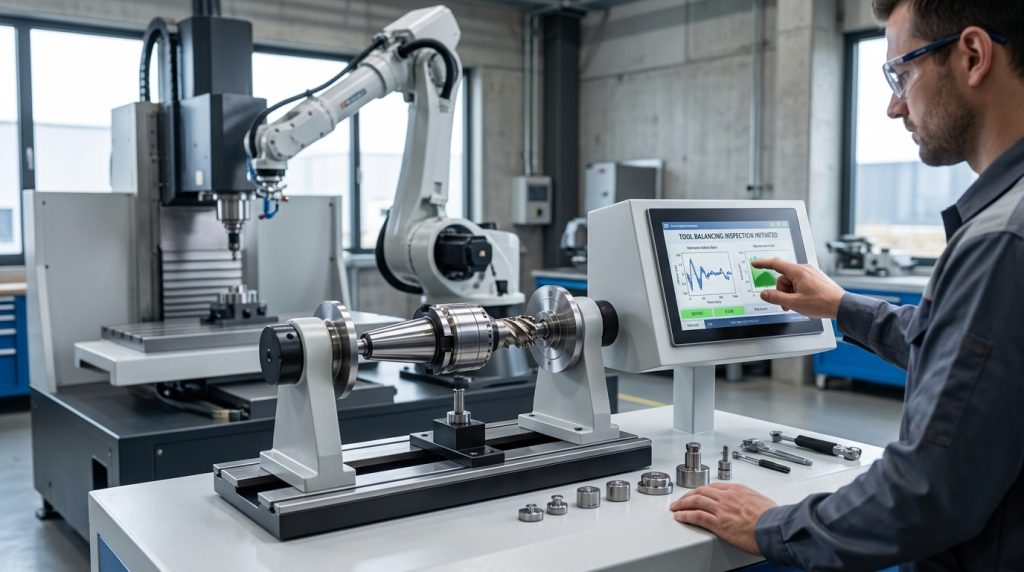
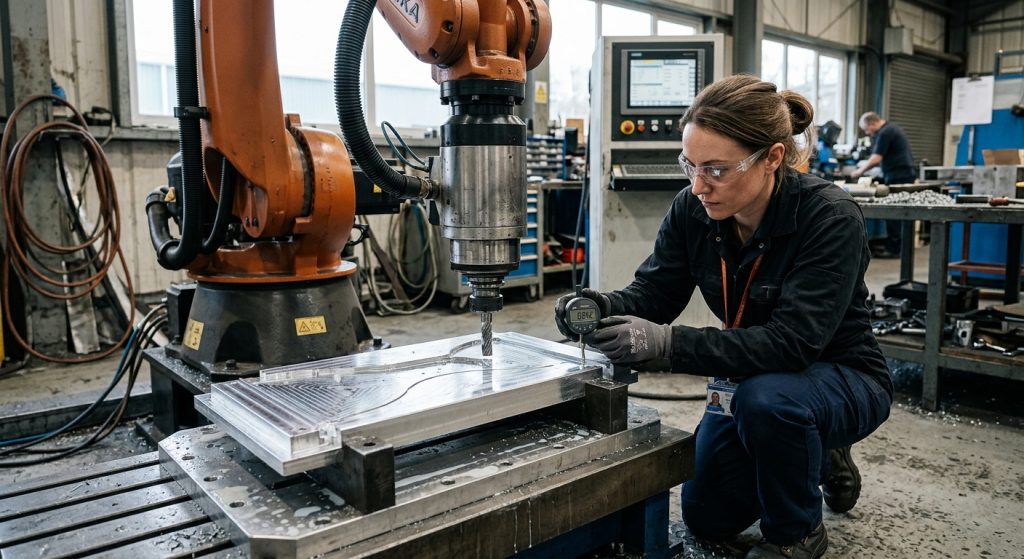
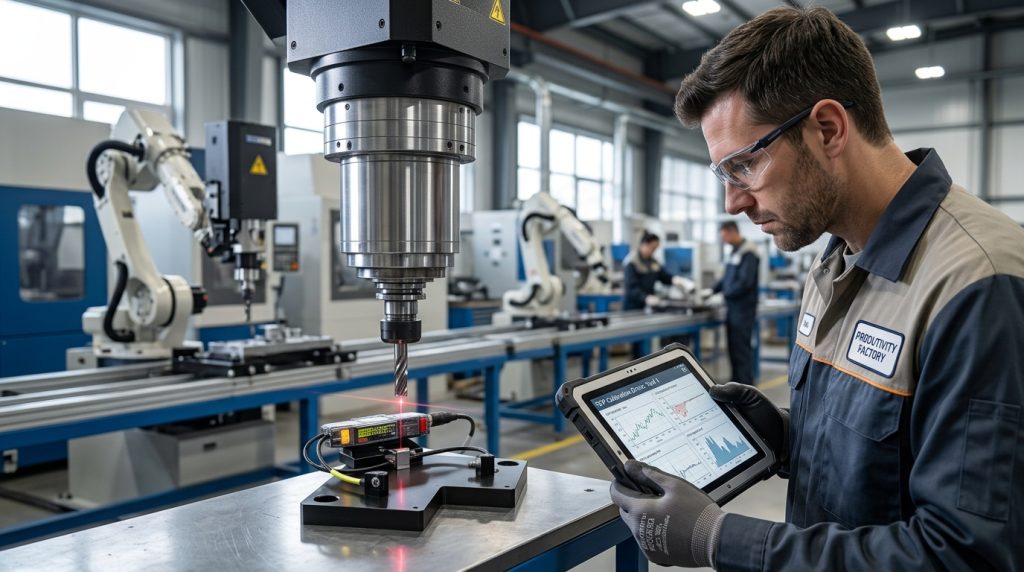
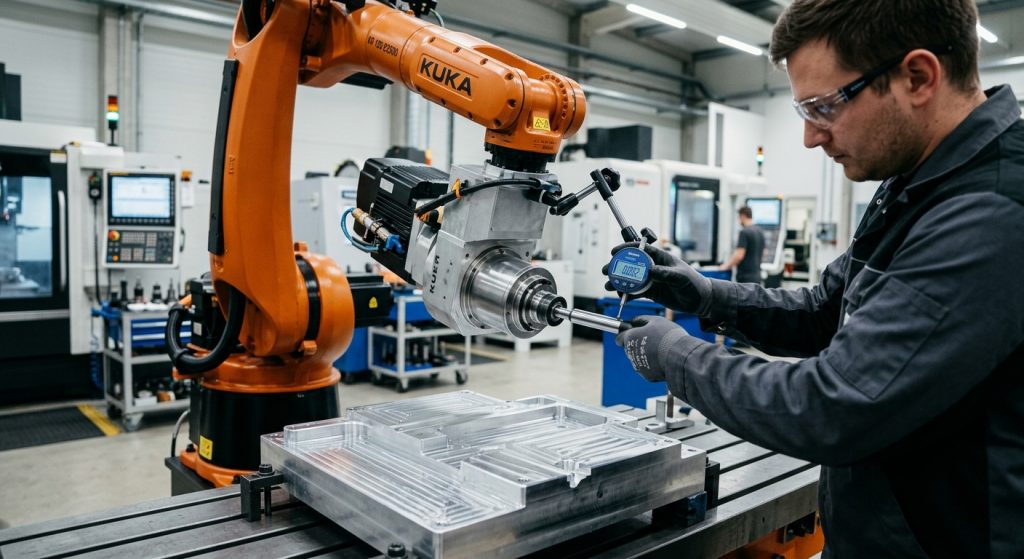
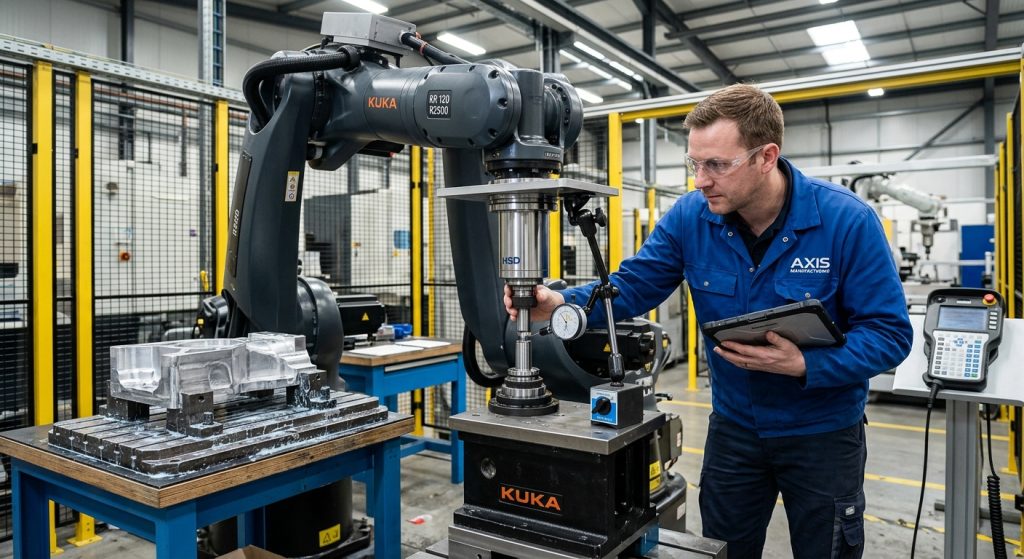
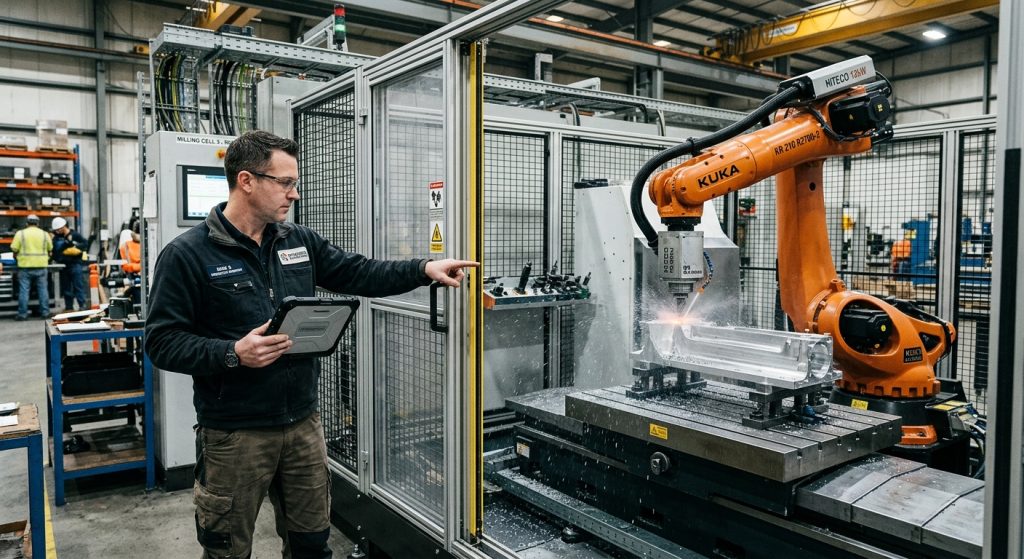
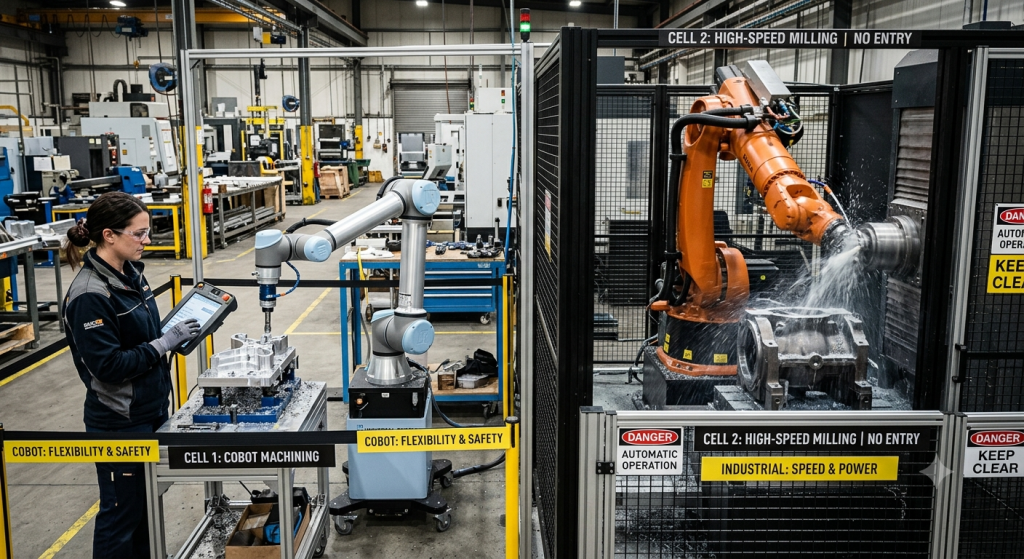
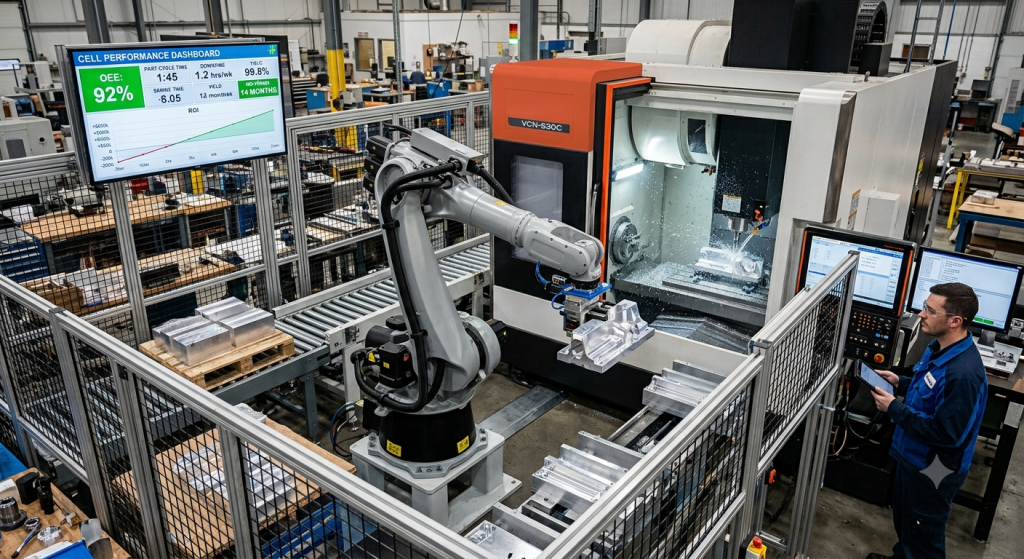
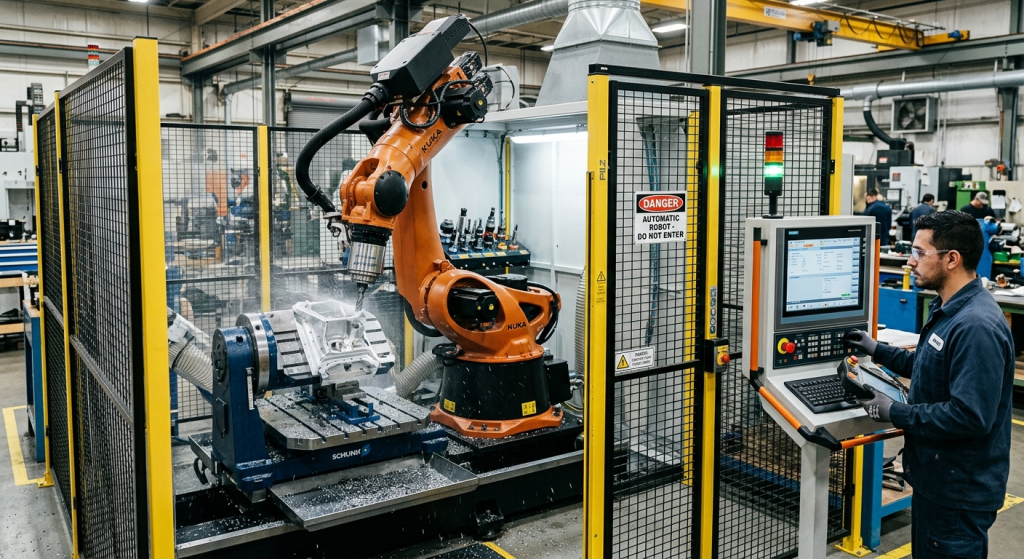
Robotic milling uses an industrial robot equipped with a spindle or cutting tool to machine large, complex or difficult-to-access workpieces. Compared with conventional CNC machining, a robotic milling cell can provide a larger and more flexible working envelope, but its performance depends heavily on robot stiffness, calibration, tooling, cutting strategy and the design of the complete cell.
This category examines the technical and commercial factors that determine whether robotic machining is suitable for a production application. Topics include robotic milling accuracy, vibration control, roughing and finishing, CAM programming, post-processors, surface quality, cutting forces and the differences between industrial robots and dedicated CNC machine tools. The articles are intended for engineers, manufacturers and technical buyers evaluating robotic milling systems or improving cells already in operation.
The articles in this category examine robotic milling, cutting, grinding, carving and other subtractive manufacturing processes performed with industrial robots. Coverage includes robotic cell stability, vibration, machining traceability, CAM workflows, post-processor design, tool orientation, roughing and finishing strategies, and the influence of robot configuration on accuracy and surface quality.
Applications include large molds and patterns, wood components, foam, plastics, composites, lightweight materials, yacht components, film and scenic production, and selected metalworking processes. The category also explores KUKA, ABB and FANUC platforms, refurbished robots used for machining, and hybrid systems that combine additive manufacturing with robotic milling or finishing.
Robotic milling is often a strong option when the workpiece is large, the geometry requires multiple tool orientations or the process benefits from a flexible working envelope. It is commonly applied to materials and operations where cutting forces can be controlled and where the required tolerance does not demand the structural rigidity of a dedicated CNC machine tool.
CNC machining generally remains the stronger choice for high material-removal rates, rigid metal cutting, very tight geometric tolerances and applications requiring highly consistent precision across long production runs. Industrial robots can machine harder materials, but the technical case depends on tool engagement, spindle power, robot posture, process forces and the expected surface finish. The relevant comparison is therefore between complete process capabilities, not simply robot reach versus CNC accuracy.
Robot repeatability alone does not define machining accuracy. Performance is also affected by absolute calibration, structural stiffness, spindle and tool weight, fixture stability, tool length, cutting parameters, workpiece material and the position of each robot axis during the toolpath. Vibration and deflection can change as the robot moves through its working envelope, which is why identical cutting parameters may not produce identical results in every posture.
CAM software and the post-processor must also account for robot kinematics, axis limits, singularities, external axes and the required tool orientation. A generic toolpath may be geometrically valid but operationally unsuitable if it creates unstable robot postures, unnecessary joint movement or abrupt changes in cutting direction.
A technical evaluation should begin with the workpiece dimensions, material, geometry, required tolerance, surface finish, current machining method, annual volume and expected cycle time. The assessment should then consider robot payload and reach, spindle requirements, tooling, fixtures, external axes, offline programming, extraction, guarding and operator access.
When comparing integrator proposals, manufacturers should evaluate the complete cell and the machining assumptions behind it. A successful demonstration part does not by itself prove production capability; repeatability, tool wear, cycle stability, calibration, maintenance and fault recovery must also be considered.
Explore RHTS robotic milling systems for large-format machining, cutting and automated manufacturing applications.

 English
 Italiano
 Українська
 Русский
 Español