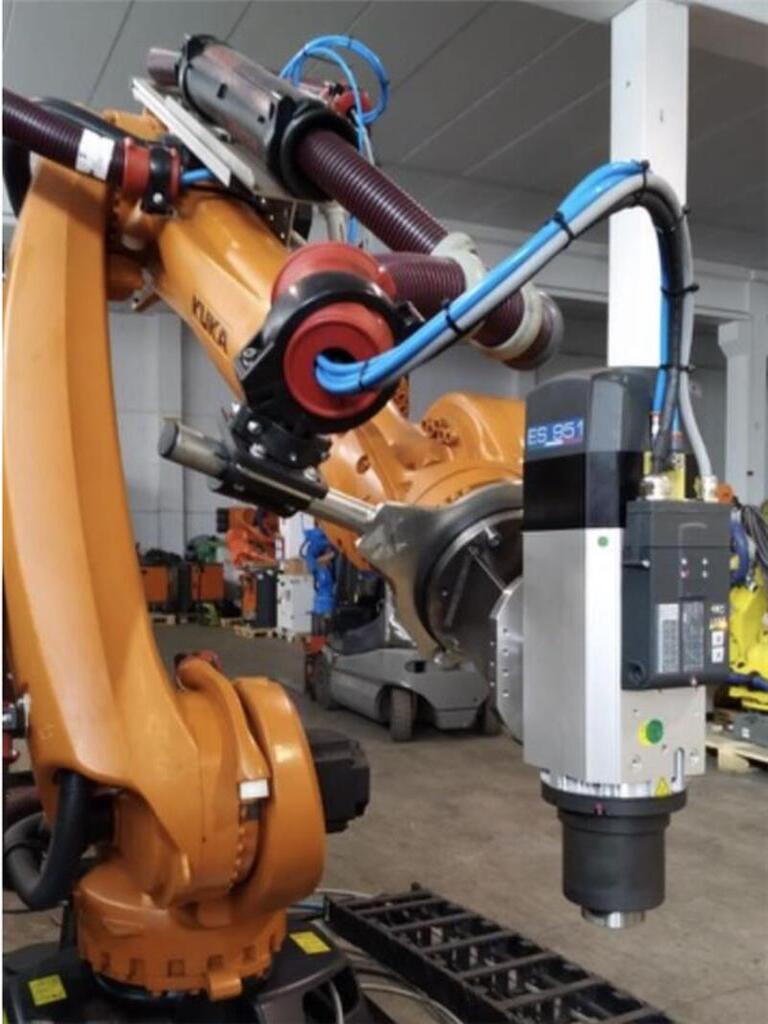
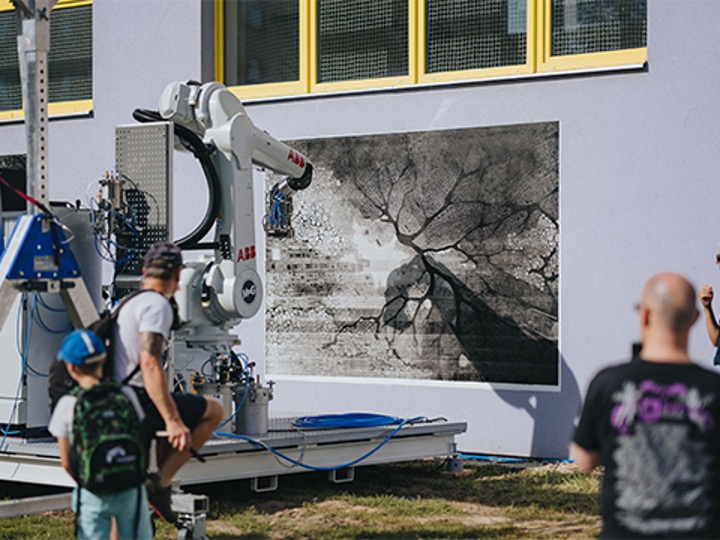
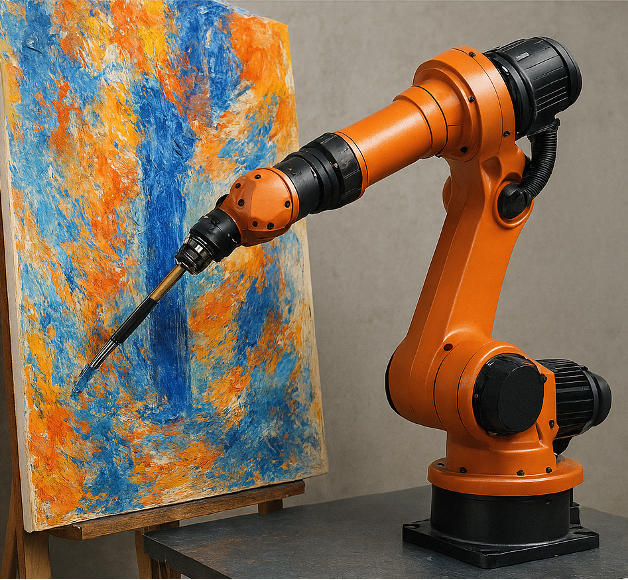
Robot art and robotic architecture use industrial arms as programmable tools for painting, sculpture, carving, fabrication, interactive installations and experimental construction. KUKA, ABB, FANUC and other robotic platforms can translate digital models, algorithms and sensor data into physical movement, allowing artists, architects and designers to work at scales and with geometries that conventional studio tools may not support.
This category examines the creative and technical relationship between industrial robotics, art, architecture and digital fabrication. Topics include robotic painting, stone and foam sculpture, parametric design, kinetic installations, heritage preservation, custom furniture and human-machine collaboration. The articles are intended for architects, artists, designers, fabrication studios and engineers evaluating how robotic systems can become reliable creative production tools.
The articles in this category examine how industrial robotic arms are used in painting, sculpture, carving, kinetic art, interactive installations, architectural fabrication, furniture design and cultural heritage projects. Coverage includes robotic painting systems, AI-assisted drawing, marble and stone carving, expanded-polystyrene sculpture, metal folding, 3D scanning and digitally controlled fabrication.
The category also explores work produced with KUKA, ABB, FANUC and other industrial platforms by artists, architects, universities, research laboratories and specialist fabrication studios. Projects are considered both as cultural works and as technical systems involving programming, tooling, material behaviour, sensing and coordinated robotic motion.
An industrial robot does not create a finished work independently. The physical result depends on the artist or designer’s intent, the digital workflow, the programmed toolpath, the end effector, the selected material and the behaviour of the robotic system during execution. Even when artificial intelligence contributes to image generation or movement planning, authorship and production remain distributed across people, software and machines.
Different artistic processes require different forms of control. Robotic painting may depend on brush pressure, pigment flow and surface tracking. Stone or foam sculpture requires suitable tooling, toolpath planning, dust extraction and control of cutting forces. Interactive installations may add machine vision, force sensing, real-time data or audience input. Creative freedom therefore depends on engineering decisions that make the process predictable enough to use without eliminating variation entirely.
In architecture, industrial robots can connect parametric design directly with material production. They are used to cut, mill, fold, assemble, print or position components whose geometry would be difficult to produce with conventional fixed-axis equipment. This allows architects and fabrication teams to explore non-standard structures, customised elements and workflows in which design data controls the manufacturing process.
Robotic fabrication does not automatically make an architectural system practical or scalable. Material properties, structural requirements, tolerances, joining methods, installation logistics, production time and regulatory constraints still determine whether a concept can move beyond a prototype. The most credible projects combine computational design with a realistic understanding of fabrication and construction.
The appropriate system depends on the required working range, payload, tool orientation, accuracy, material and interaction model. Large sculptures may require a high-payload robot, an external axis or a rotary positioner. Detailed painting or scanning may place greater emphasis on smooth motion, calibration and sensor integration. Architectural production may require offline programming, CAD/CAM compatibility and repeatable coordination between several tools or processes.
Refurbished industrial robots can be suitable for art, architecture and research projects when their mechanical condition, controller generation and software compatibility have been verified. They may provide access to industrial-scale reach and payload while preserving more of the project budget for tooling, programming, safety and fabrication development.
A project should be evaluated through the intended material, geometry, scale, surface requirements, production volume and degree of human interaction. These factors determine whether the robot is used for milling, drawing, scanning, positioning, additive manufacturing or coordinated movement, and what safety and programming architecture the installation requires.
Explore RHTS new and refurbished industrial robots for art, architecture, research and digital fabrication projects requiring adaptable KUKA, ABB, FANUC or Yaskawa platforms.

 English
 Italiano
 Українська
 Русский
 Español