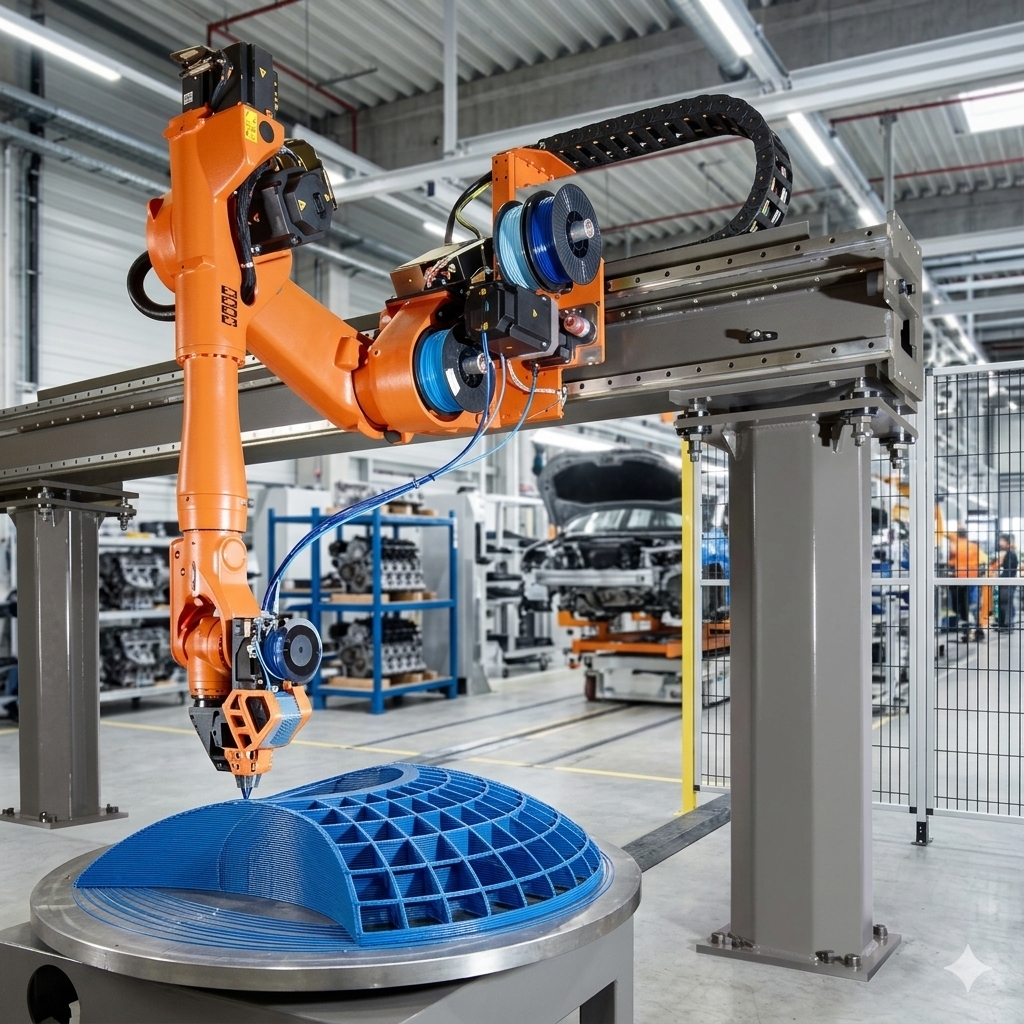
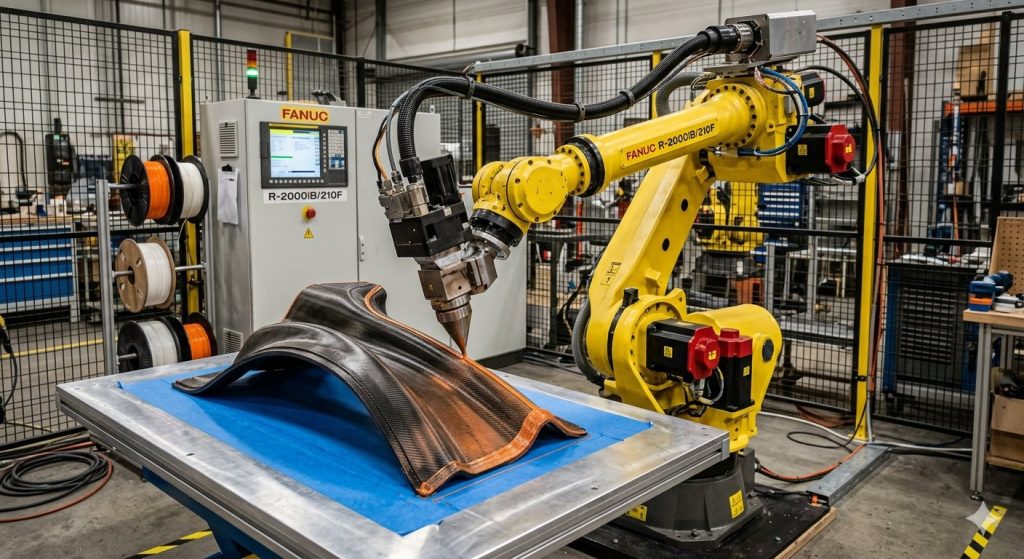
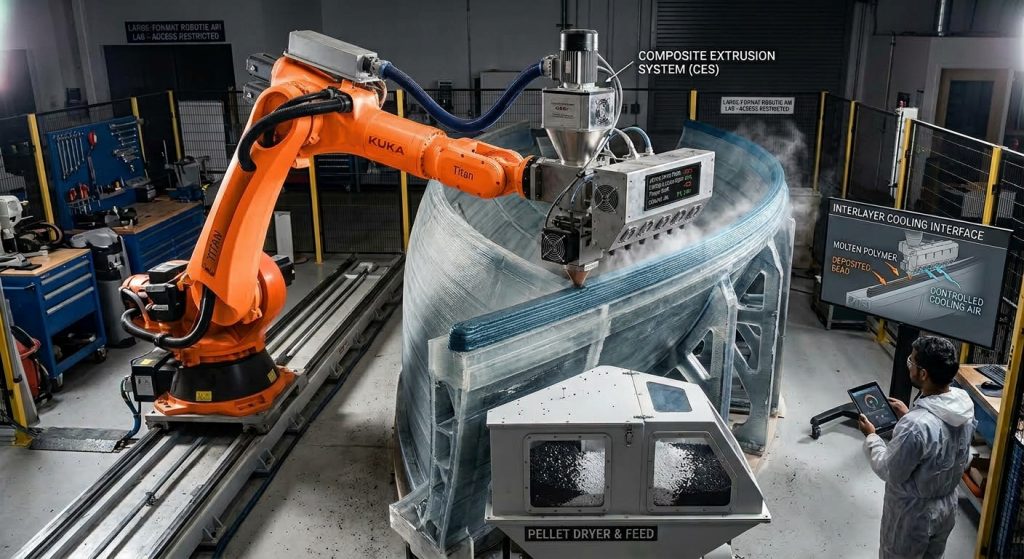
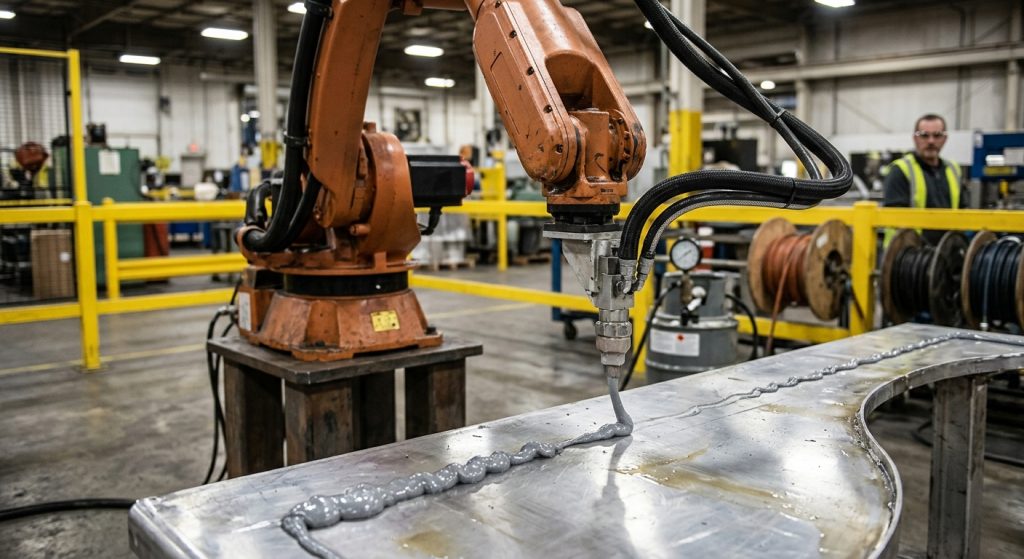
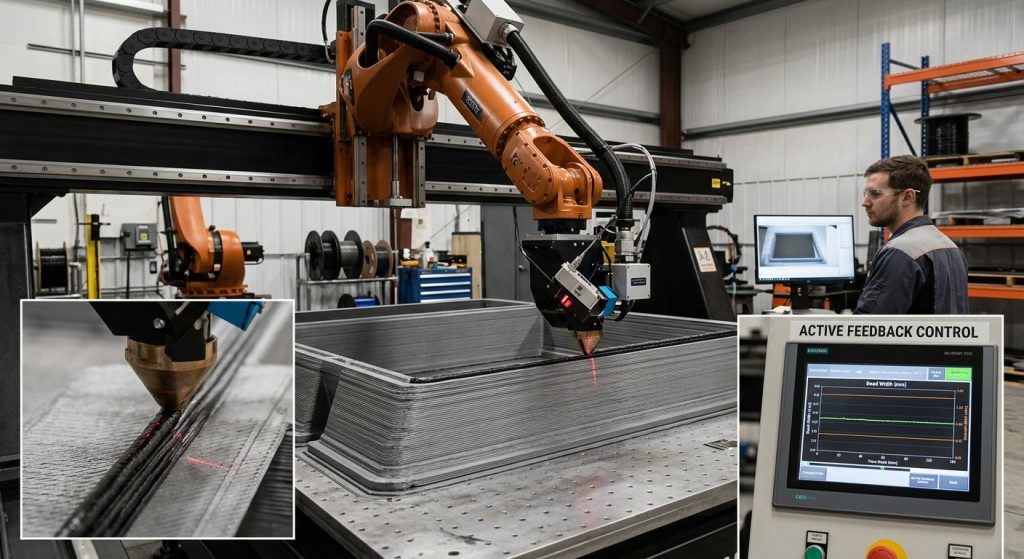
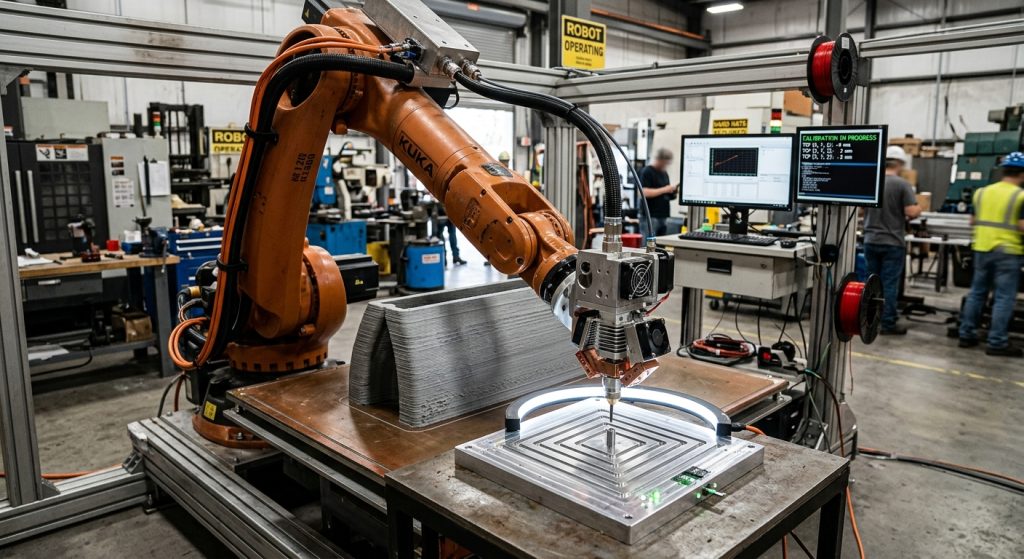
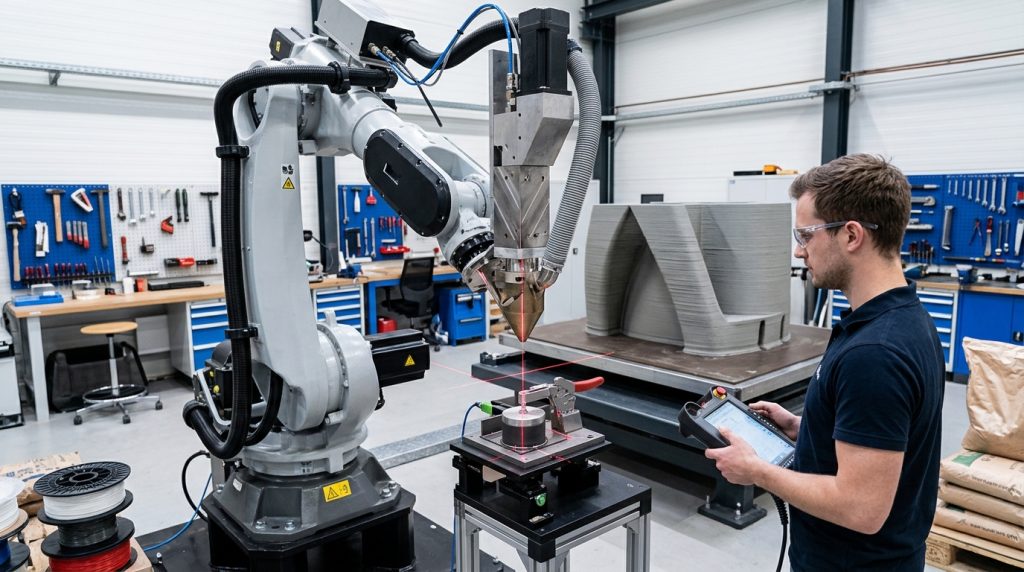
3D printing robots use six-axis industrial arms to deposit concrete, polymers, composites or metal across large and complex geometries. Their multidirectional movement and flexible working envelope make them relevant to construction, architecture, furniture production, formwork, large-scale components and metal additive manufacturing.
This category examines real robotic 3D printing systems, projects and technical limitations, including ABB, KUKA and FANUC platforms, concrete extrusion, large-format fabrication, hybrid additive-subtractive cells and the transition from prototype to repeatable production.
The articles in this category examine concrete house printing, architectural components, furniture, formwork, large-scale polymer deposition and metal additive manufacturing. They also cover industrial platforms from ABB, KUKA and FANUC, together with studios and technology companies developing robotic fabrication systems for construction and design.
Coverage includes complete buildings, infrastructure projects, custom architectural elements and hybrid production cells that combine additive manufacturing with robotic milling or finishing. The objective is to distinguish technically viable applications from projects that remain demonstrations or one-off installations.
The performance of a robotic 3D printing system depends on more than the industrial robot itself. Material preparation, pumping or feeding, extrusion control, path planning, robot calibration, deposition speed, layer adhesion and environmental conditions all affect the result. Surface finish, dimensional control and production repeatability also determine whether a process can move from prototype to recurring production.
Robotic arms provide flexible tool orientation and access to complex geometries, but they do not automatically replace gantry printers, prefabrication, cast concrete or conventional construction. The appropriate process depends on component size, material, geometry, required finish, production volume and the level of automation required.
A technical evaluation should begin with the required build volume, material, deposition rate, geometry, accuracy, surface finish and production objective. These parameters influence the robot model, reach, payload, extrusion equipment, programming strategy and safety architecture of the complete cell.
Explore RHTS 3D printing robot systems for concrete construction and large-format industrial applications.

 English
 Italiano
 Українська
 Русский
 Español