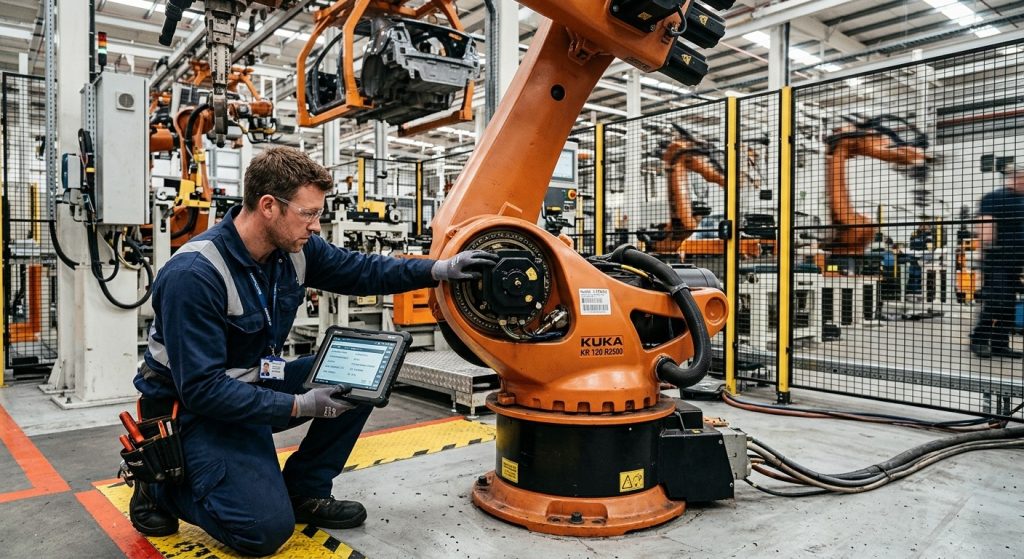
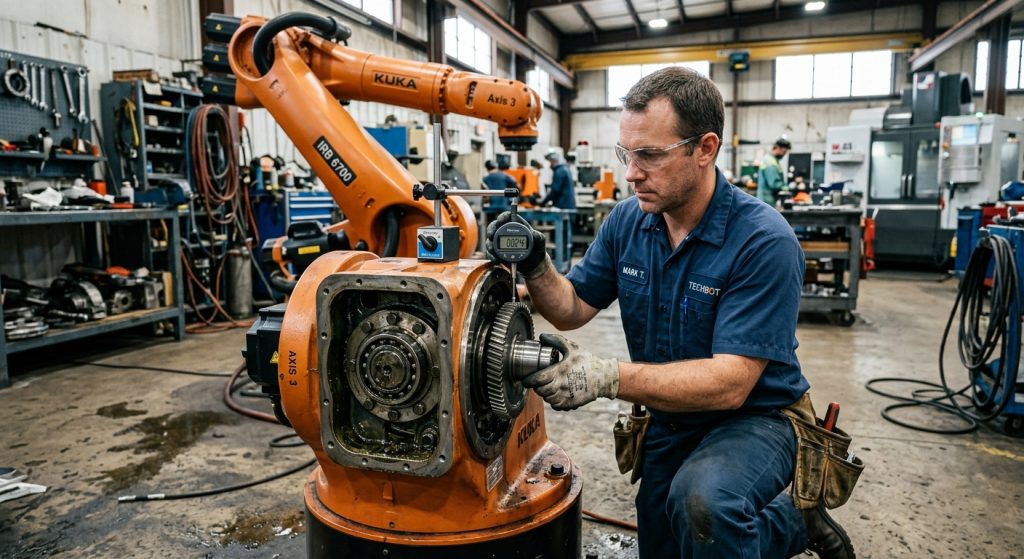
Refurbished industrial robots are previously operated systems that have been inspected, repaired, tested and prepared for a new production or research application. They can provide access to proven KUKA, ABB, FANUC and Yaskawa platforms with suitable payload, reach and controller capabilities, often with a lower capital requirement or shorter acquisition time than a comparable new system.
This category examines where refurbished robots can deliver reliable value in industrial automation, robotic milling, large-format 3D printing, education, architecture and creative fabrication. The articles are intended for manufacturers, engineers, universities, integrators and technical buyers evaluating robot condition, application compatibility, controller generation, support requirements and the total cost of placing a refurbished industrial robot into productive use.
The articles in this category examine how refurbished industrial robots are reused across manufacturing, robotic milling, large-format 3D printing, education, research, architecture and creative fabrication. Coverage includes KUKA, ABB, FANUC and Yaskawa platforms, together with the application requirements that determine whether an existing robot generation can be integrated successfully into a new cell.
Universities and makerspaces may use refurbished robots to teach programming, kinematics, safety and real industrial workflows. Manufacturers and fabrication studios may select them for machining, additive manufacturing, handling or large-scale production applications where the required payload, reach and controller functionality are already available on proven robot models.
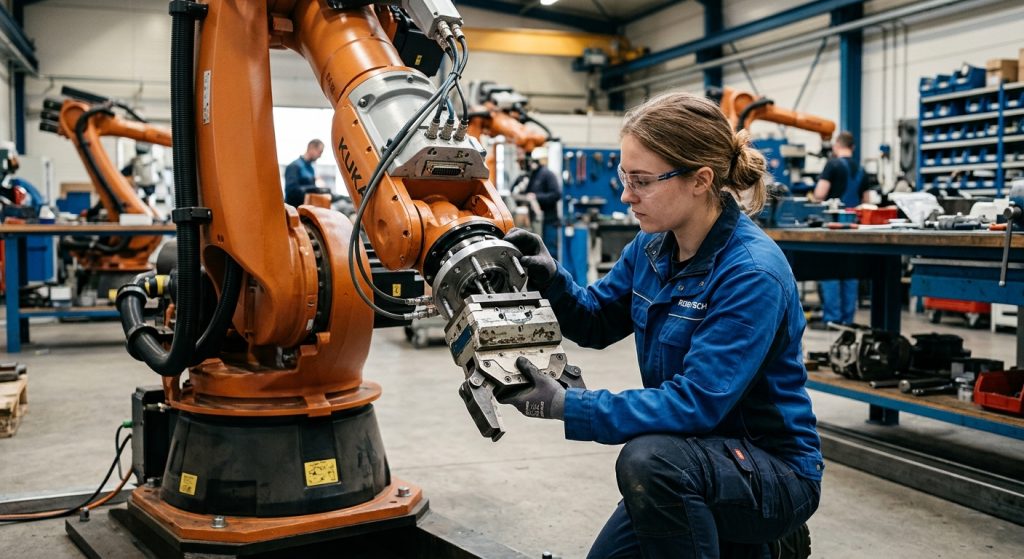
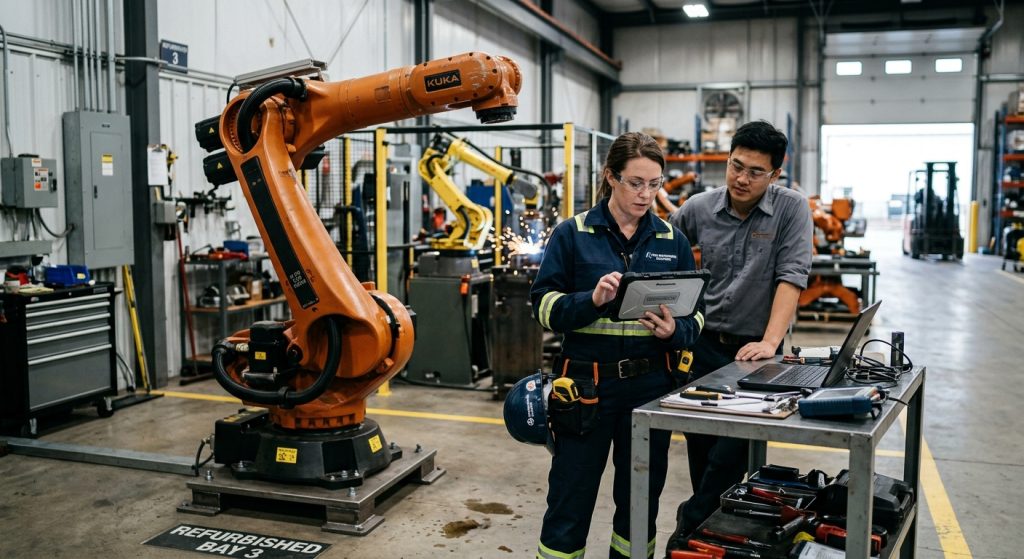
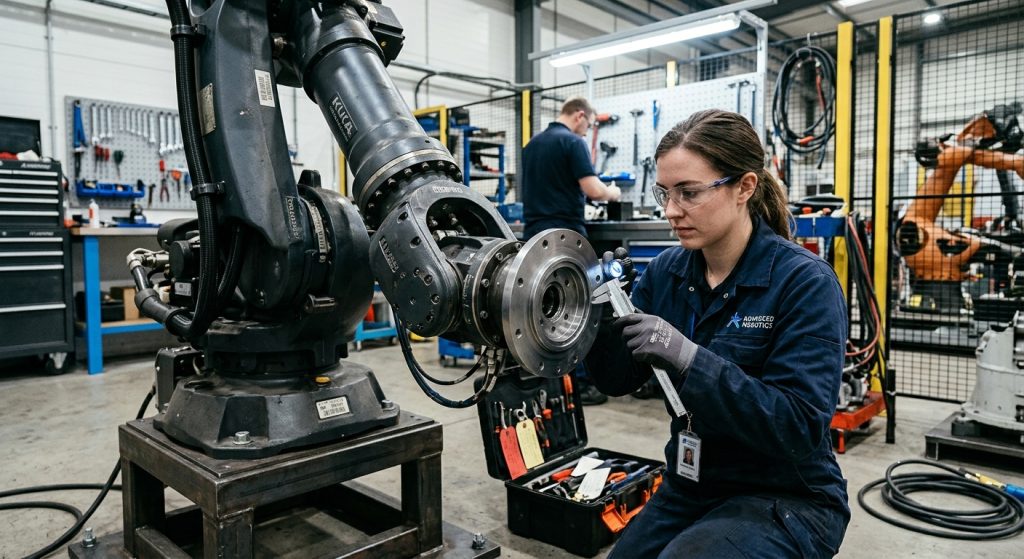
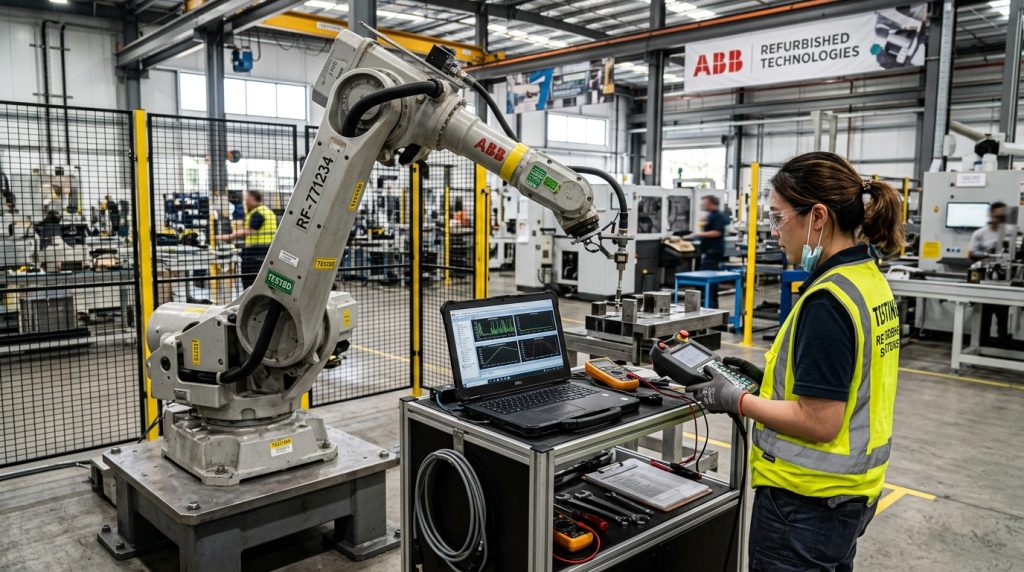
A used industrial robot may be sold in its existing condition with limited inspection or preparation. A refurbished robot should undergo a defined technical process that may include cleaning, mechanical inspection, replacement of worn components, controller checks, battery replacement, calibration, testing and verification of the robot under operation. The scope of refurbishment should therefore be documented rather than assumed from the label alone.
Operating hours are only one indicator of condition. Buyers should also examine service history, gearbox backlash, motor and brake condition, encoders, cabling, seals, controller generation, teach pendant condition, installed software options and the availability of spare parts. A robot with fewer operating hours is not automatically the stronger purchase if it has been poorly maintained or stored under unsuitable conditions.
A refurbished robot can be a practical option when the application does not require the newest controller generation, when a specific reach or payload configuration is already proven for the process, or when the available budget must cover the entire automation cell rather than the robot arm alone. It can also provide access to models that remain widely supported by integrators but are no longer part of the manufacturer’s current range.
The correct comparison is based on total installed cost. Transport, tooling, external axes, safety equipment, programming, software, fixtures, integration, commissioning, operator training and future maintenance can represent a substantial part of the project. A low purchase price does not create a strong business case if the robot requires extensive repairs, lacks compatible software or cannot be supported throughout the expected life of the cell.
A technical evaluation should begin with the intended application, required payload, working reach, mounting position, cycle time, accuracy, environmental conditions and compatibility with existing factory systems. The robot identification, controller model, manufacturing year, operating hours, maintenance records, software options and test results should then be verified against those requirements.
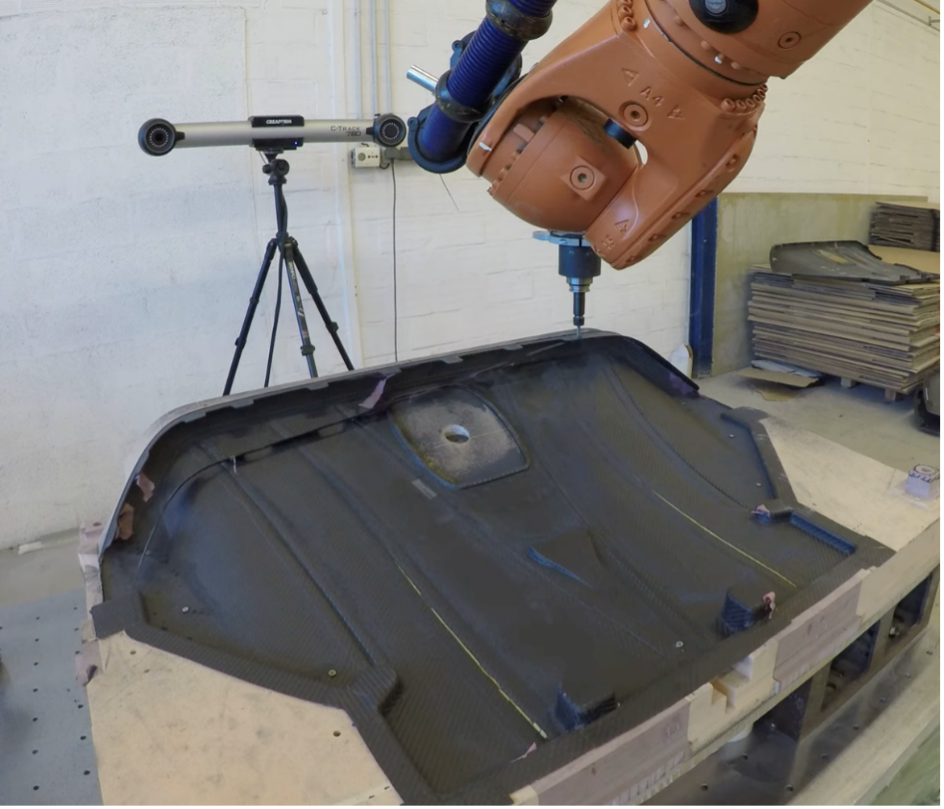
For machining and additive manufacturing applications, the assessment must also consider robot stiffness, spindle or extruder weight, cable routing, external axes, calibration and the dynamic forces generated by the process. The robot should be selected as part of a complete production system rather than as an isolated piece of equipment.
Explore RHTS new and refurbished industrial robots and request a configuration based on the required application, payload, reach and budget.

 English
 Italiano
 Українська
 Русский
 Español