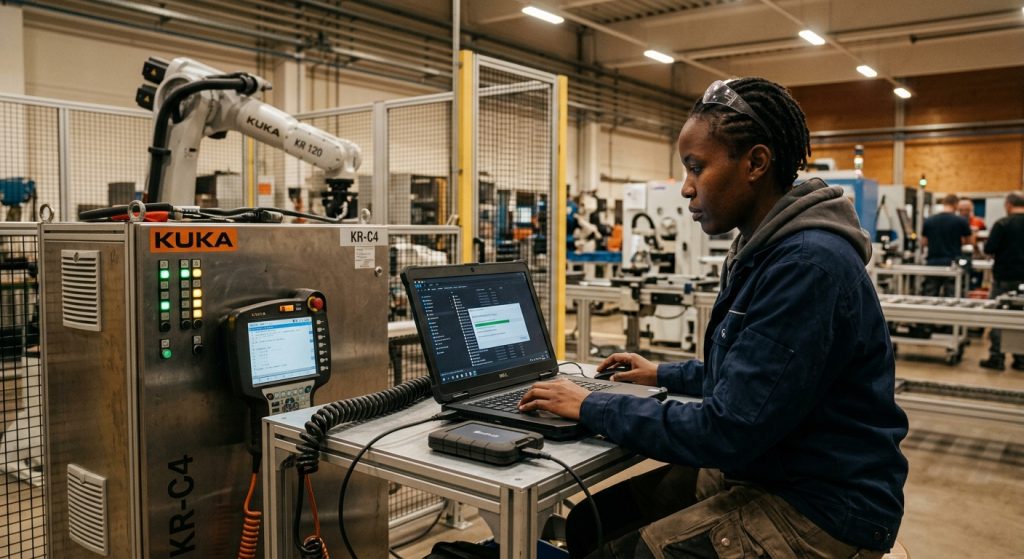
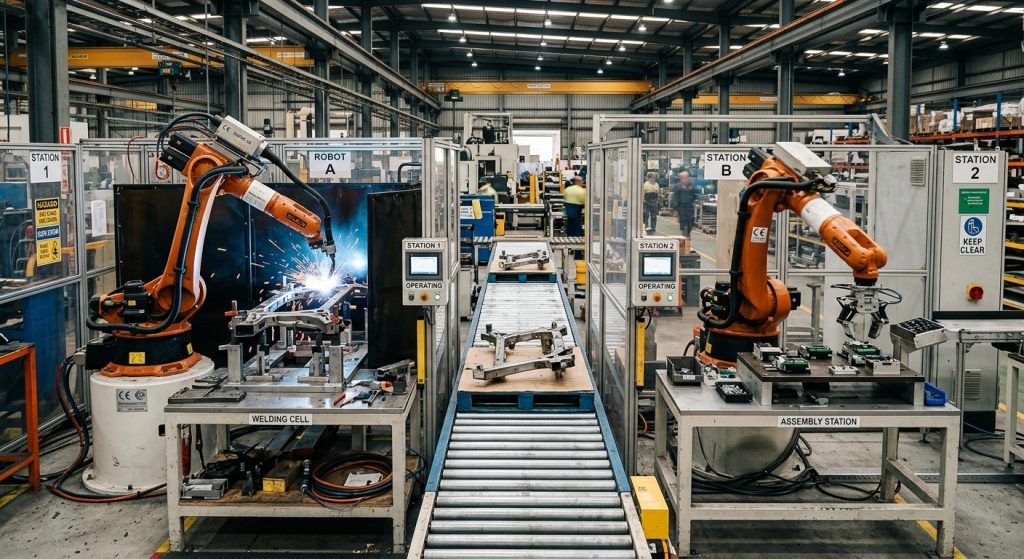
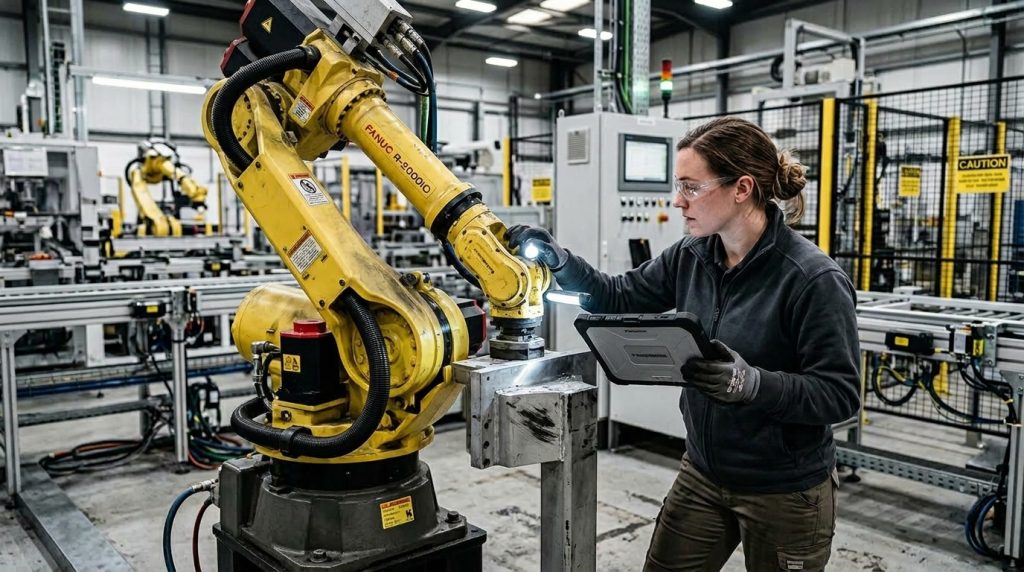
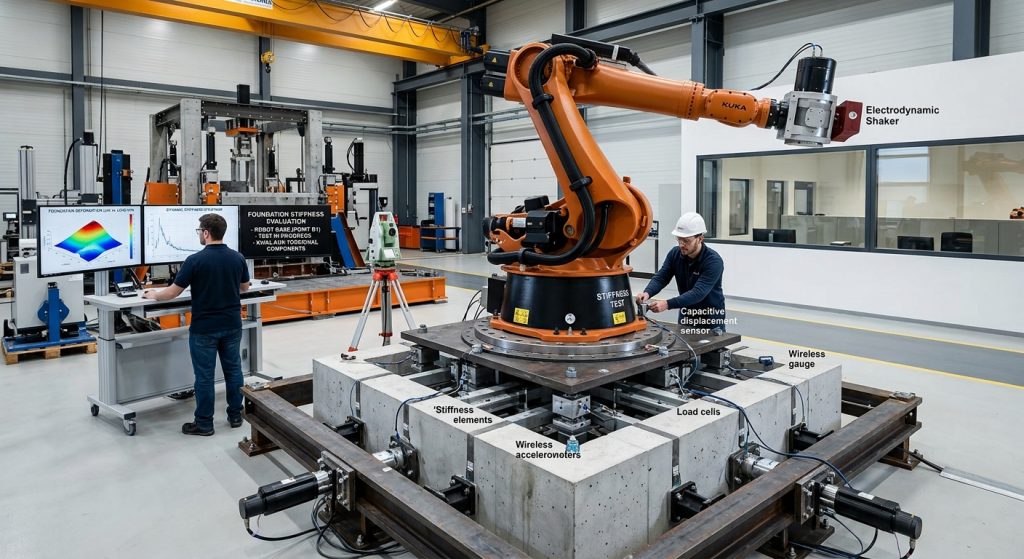
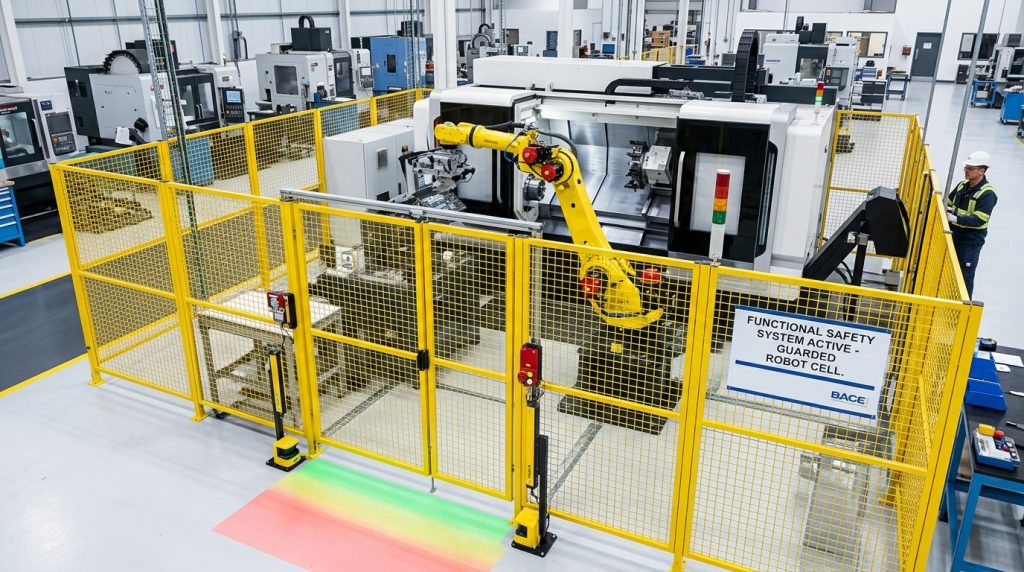
Industrial robots are programmable machines used for welding, machining, material handling, inspection, assembly, additive manufacturing and other automated production tasks. Their performance depends on the selected robot model, payload, reach, controller, tooling, cell layout and integration with the wider manufacturing process.
This category examines KUKA, ABB, FANUC and Yaskawa industrial robots across real applications, industries and operating environments. The articles are intended for engineers, production managers, integrators and technical buyers comparing robot platforms, evaluating automation opportunities and assessing whether a specific robotic system can meet the required cycle time, accuracy, reliability and return on investment.
The articles in this category examine how industrial robots are selected and applied across welding, material handling, loading and unloading, palletizing, machining, inspection, additive manufacturing and specialist production environments. Coverage includes KUKA, ABB, FANUC and Yaskawa systems, together with collaborative robots, mobile robotic platforms, programming interfaces and the sensors and peripheral equipment required to operate a complete automation cell.
Application examples span aerospace, solar manufacturing, healthcare research, carbon-fibre construction, wood processing and general manufacturing. The objective is to show how robot capabilities translate into production performance rather than treating brand, payload or reach as isolated specifications.
The correct industrial robot is determined by the process, not by brand recognition alone. Payload must account for the end effector, cables, tooling and dynamic process forces. Reach must provide access to the full working area without forcing the robot to operate continuously near singularities or extreme joint positions. Accuracy, repeatability, speed, controller compatibility, mounting position and environmental protection can also determine whether a robot is suitable for the task.
The wider cell architecture is equally important. Fixtures, safety systems, PLC logic, material flow, offline programming, operator access and maintenance requirements all affect cycle time and production reliability. A robot with strong technical specifications can still underperform when the surrounding system is poorly designed or difficult to support.
Investment decisions should be based on the complete application rather than the purchase price of the robot alone. Relevant factors include current labour and process costs, production volume, product variation, required uptime, integration effort, operator training, maintenance, spare-parts availability and the expected life of the cell.
New and refurbished industrial robots can both be viable options when their condition, controller generation, payload, reach and application requirements are evaluated correctly. Refurbished KUKA and ABB robots may reduce capital expenditure for suitable projects, but the business case must also account for testing, integration, tooling, safety and long-term technical support.
A technical assessment should begin with the task, workpiece dimensions and weight, required cycle time, process accuracy, production volume, available floor space and the existing factory infrastructure. These details determine the robot model, tooling, external axes, guarding, programming method and level of integration required.
Explore RHTS new and refurbished industrial robots and system configurations for applications requiring KUKA, ABB, FANUC or Yaskawa platforms.

 English
 Italiano
 Українська
 Русский
 Español