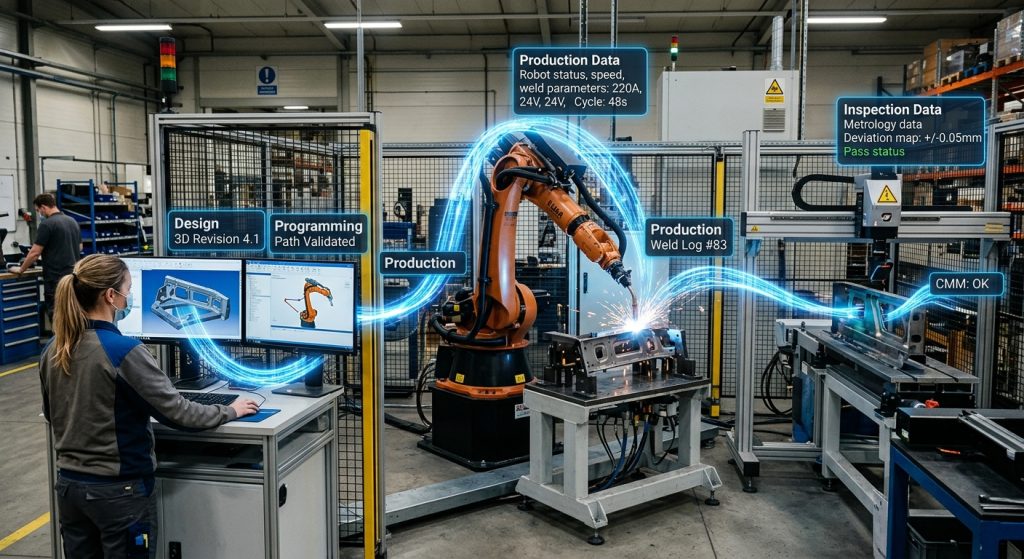
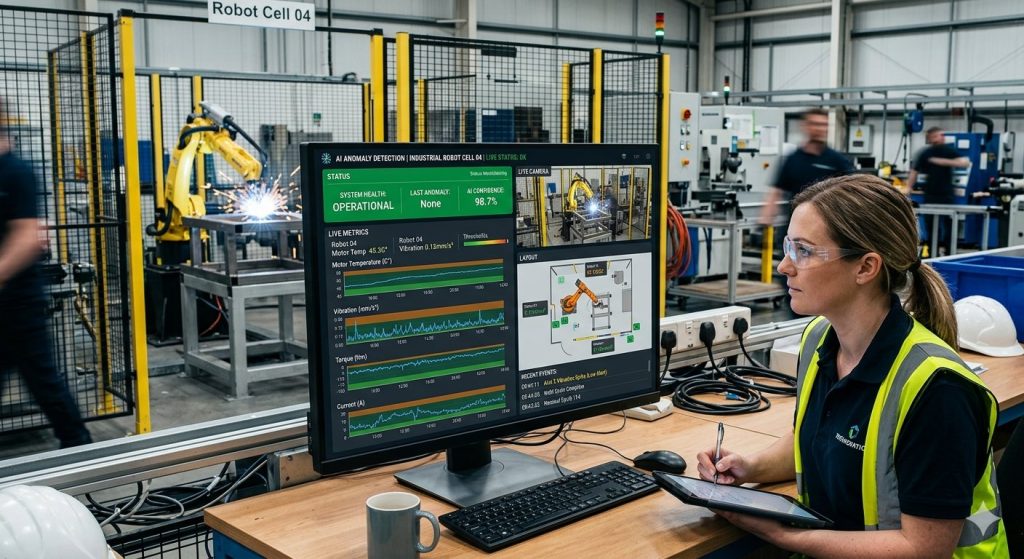
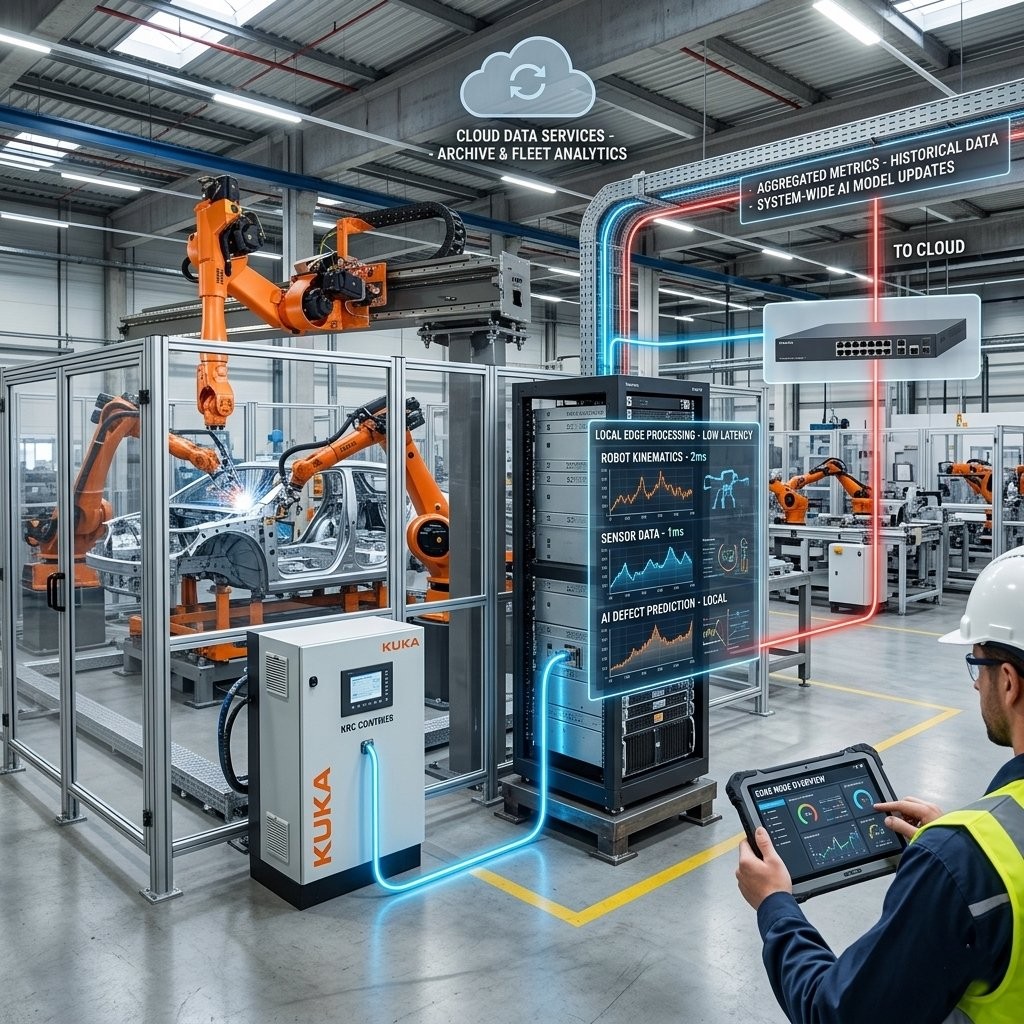
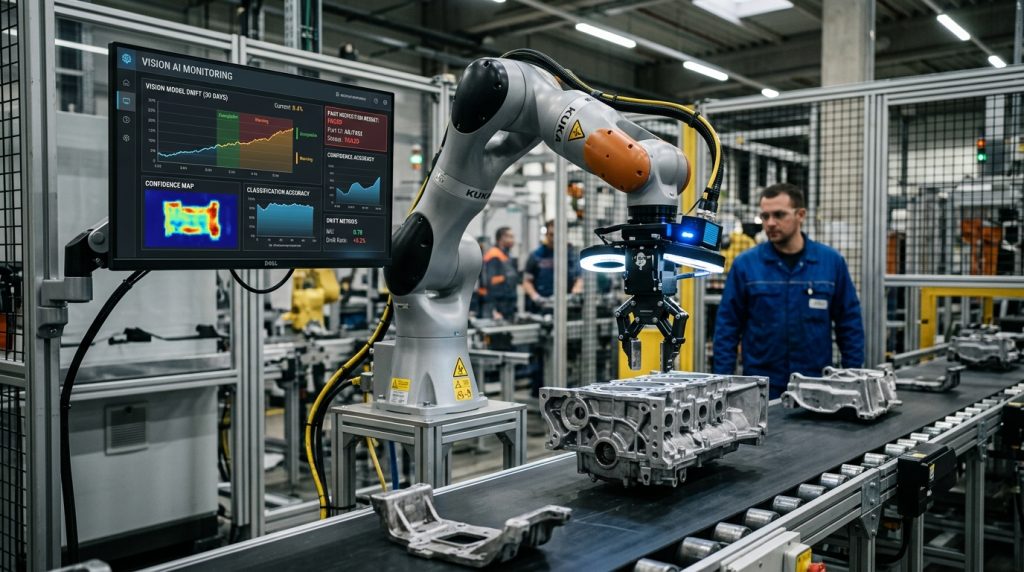
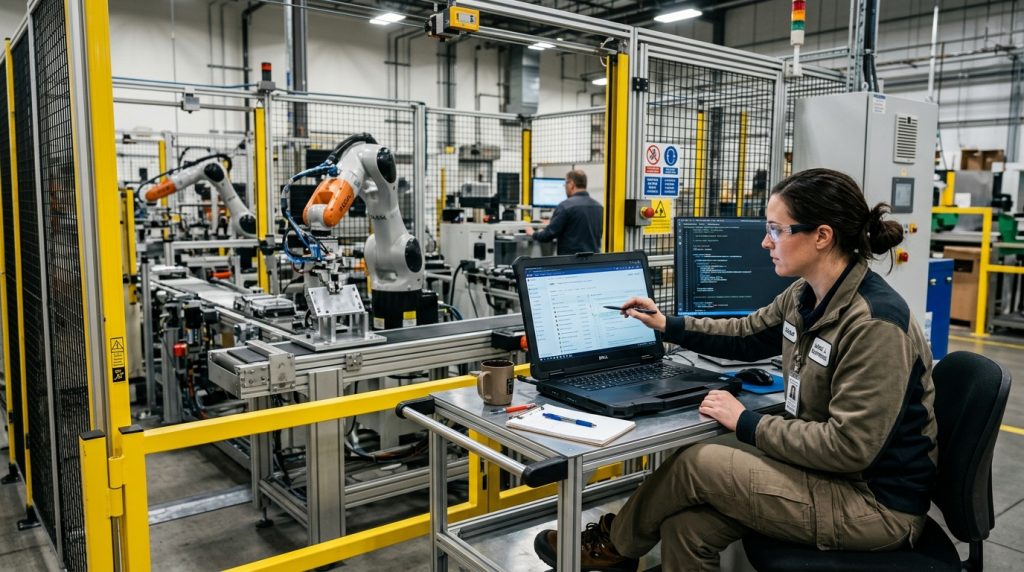
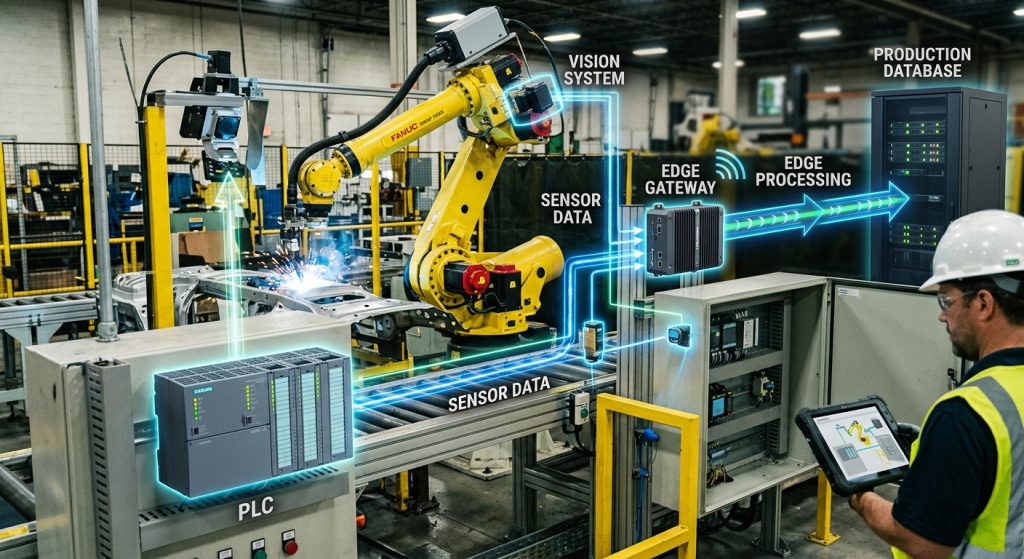
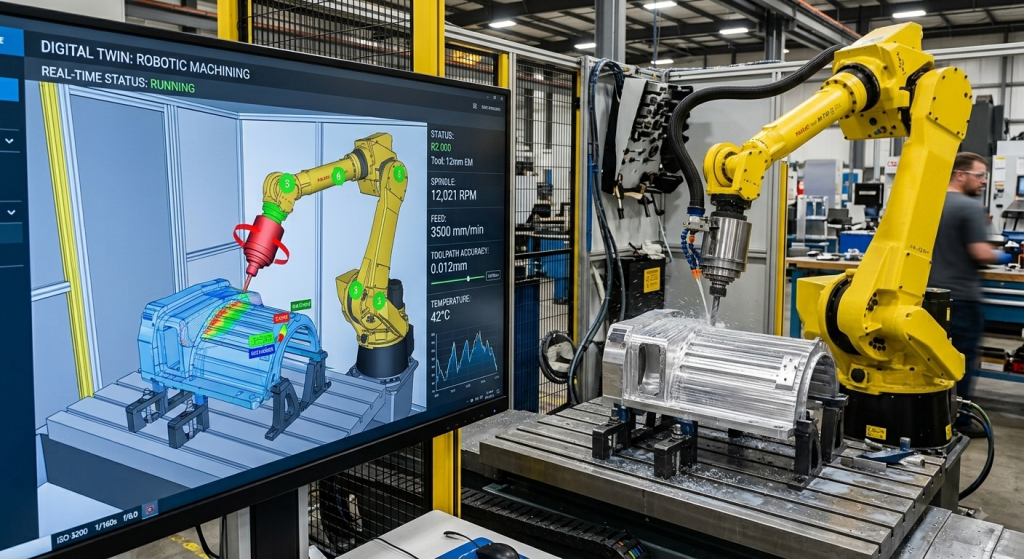
Automation and AI in industrial robotics cover the software, sensing, data and coordination systems that determine how a robotic cell is programmed, monitored and integrated into production. These technologies include AI-assisted and offline programming, machine vision, robotic inspection, collaborative robot workflows, digital twins, MES and ERP connectivity, and data-driven process control.
This category examines how those systems affect integration time, production reliability, inspection, human-robot collaboration and operational decision-making. It also analyses the limitations of AI in automation, the failure modes created by weak system architecture, and the difference between promising demonstrations and solutions ready for industrial deployment. The articles are intended for engineers, production managers, integrators and technical buyers evaluating smarter, more connected robotic automation.
The articles in this category examine the technologies that connect industrial robots to the wider production environment. Topics include AI-assisted and no-code robotic programming, collaborative robot operation, machine vision, robotic photogrammetry, automated inspection, digital twins, production data and the integration of robotic cells with MES and ERP systems.
Coverage also extends to applications in textiles, construction, education and creative production where artificial intelligence, sensing or new programming methods change how robots are deployed. Specific platforms and projects are analysed as practical examples, with attention to whether they reduce integration effort, improve process control or remain limited to experimental use.
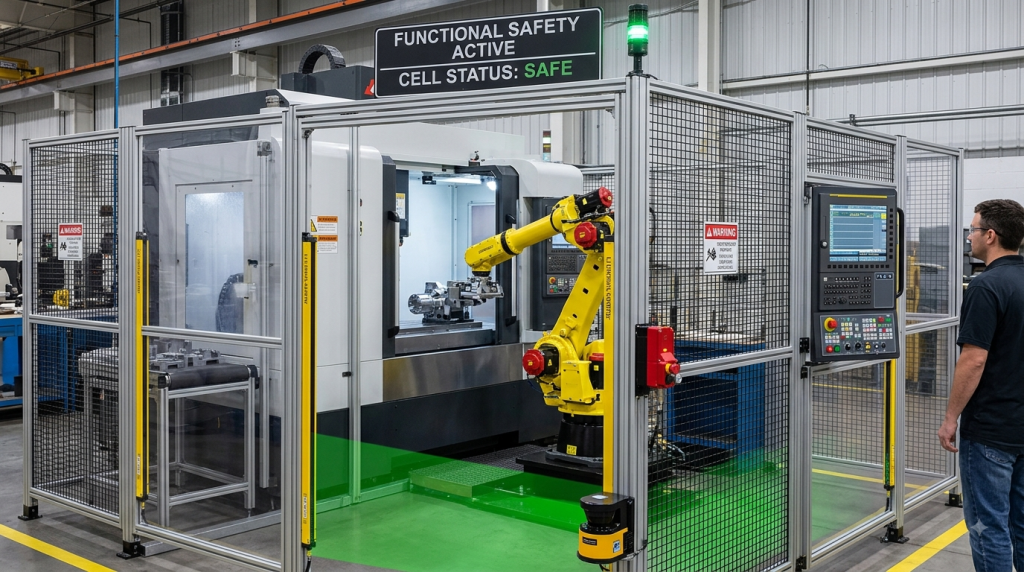
An industrial robot does not operate as an isolated machine. Cell performance depends on the interaction between the robot controller, tooling, sensors, safety systems, PLC logic, production software, network infrastructure and human operators. A mechanically reliable robot can still deliver poor results when data is incomplete, interfaces are poorly defined or the control architecture cannot respond correctly to process variation.
Artificial intelligence adds another decision layer, but it does not remove the need for robust engineering. AI-assisted programming, computer vision and predictive models must be evaluated for data quality, repeatability, latency, error handling and compatibility with the existing production system. The relevant question is not whether a solution uses AI, but whether it improves a measurable production outcome without introducing unacceptable operational risk.
A technical evaluation should begin with the process objective, current bottleneck, required cycle time, product variation, available production data, inspection requirements and the systems already operating in the plant. These factors determine whether the application requires conventional automation, machine vision, collaborative robotics, AI-assisted programming, digital-twin simulation or deeper integration with production management software.
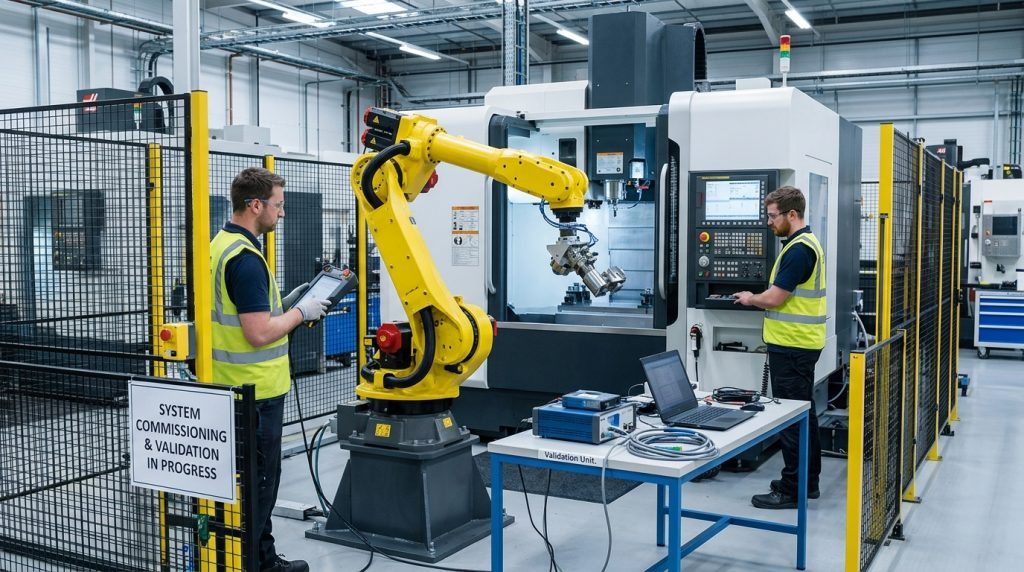
The business case should also consider integration effort, operator training, maintainability, cybersecurity, fault recovery and the ability to scale beyond a pilot cell. A successful automation project is one that remains reliable and understandable after commissioning, not simply one that demonstrates advanced technology.
Explore RHTS robot integration and industrial automation solutions for production applications requiring coordinated robotics, software and process engineering.

 English
 Italiano
 Українська
 Русский
 Español