English
 Italiano
 Українська
 Русский
 Español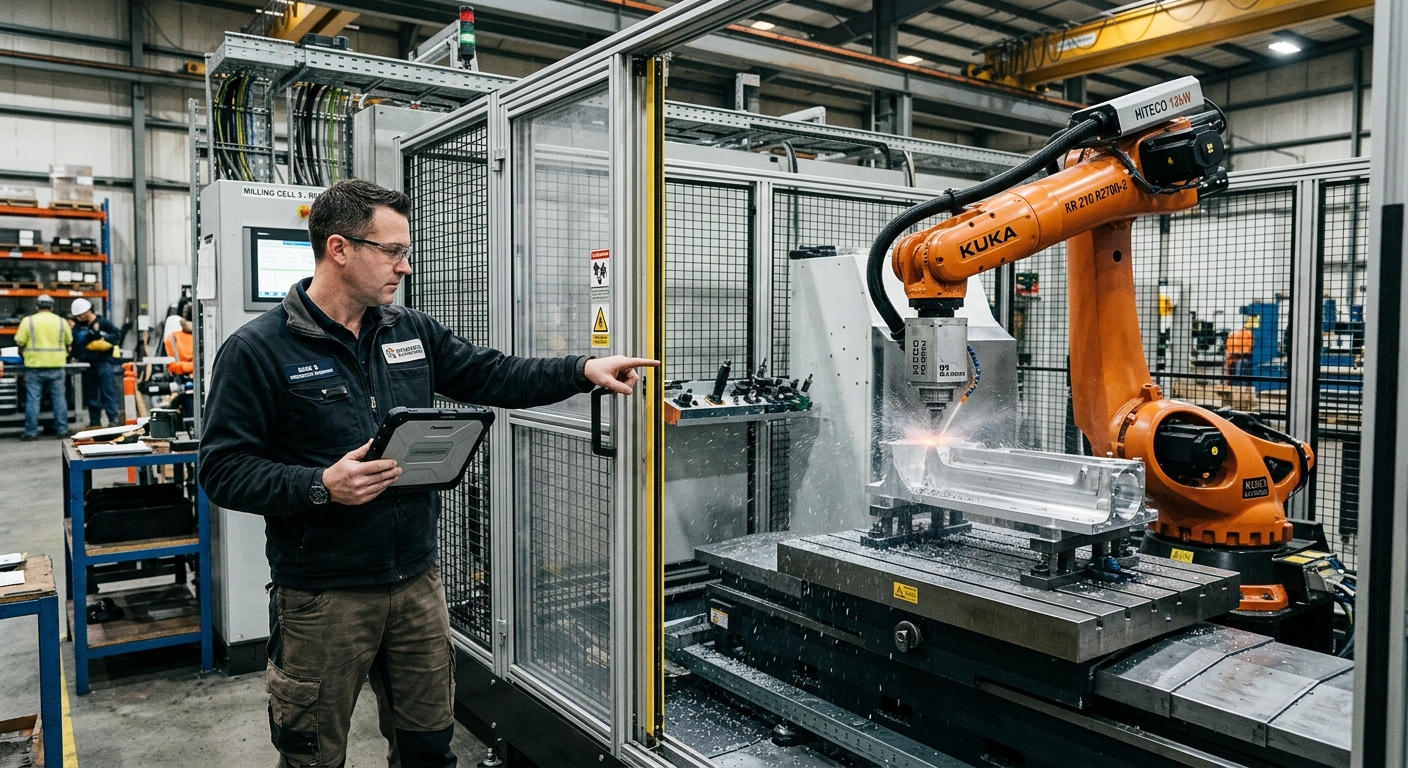

Choosing a robot integrator for machining requires more than comparing robot brands, payloads, or quotations. The integrator must understand how the complete machining process behaves when a cutting tool is mounted on an articulated robot, including stiffness, reach, tooling, workholding, programming, safety, and interaction between cell components.
A suitable integrator should translate production requirements into measurable engineering criteria before selecting equipment. This means reviewing the workpiece, material, machining operations, quality requirements, tool access, cycle requirements, available space, utilities, operator interaction, and interfaces with existing machinery.
The evaluation should therefore focus on machining experience, system engineering, risk management, validation, documentation, and support. A technically sound proposal should explain what equipment will be supplied, why the proposed architecture fits the application, and how the system will be tested before production begins.
What should a machining robot integrator understand?
Machining automation differs from applications where a robot mainly transfers parts between fixed positions. During milling, trimming, drilling, routing, or finishing, the robot may carry a spindle and cutting tool while process forces act on its mechanical structure.
The integrator should understand how robot posture, arm extension, tooling, cutting strategy, spindle selection, fixture rigidity, and workpiece geometry affect the process. A change in one area can influence accessibility, stability, surface quality, or cycle execution.
The machining task should therefore be defined before a specific robot is selected. Choosing the robot first can create unnecessary restrictions in reach, payload distribution, tool orientation, or cell layout.
Evaluate the integrator’s machining experience
Look beyond general automation experience
A robot integrator for machining should have relevant experience beyond welding, palletizing, or machine tending. Ask which machining processes the team has integrated and which materials, spindle arrangements, tooling systems, external axes, and programming workflows were involved.
The objective is not simply to collect project references. The integrator should be able to explain how previous projects addressed issues such as vibration, tool access, calibration, fixture design, or program execution.
Examine how the process is evaluated
A machining-focused integrator should request information about part geometry, material, stock condition, required operations, tooling, tolerances, surface requirements, and production sequence. Requirements that cannot be guaranteed should be identified rather than assumed.
For additional technical context, 7 Critical Factors for Robotic Milling Stability examines robot behavior, calibration, dimensional stability, material conditions, and process setup in robotic machining.
Check the complete system engineering capability
Mechanical design must cover the complete load path
The robot is only one component of the machining system. A robot integrator for machining must also consider the robot base, spindle mounting, tool holders, fixtures, workpiece supports, external axes, cable routing, extraction or cooling equipment, and automatic tool-changing equipment when required.
Payload should be evaluated at the robot wrist as a complete assembly rather than from spindle mass alone. Tooling, brackets, cables, sensors, and other wrist-mounted equipment contribute to the mechanical configuration.
Controls and software require equal attention
The integrator should define how robot programs are generated and transferred, how CAM output becomes executable robot motion, and how the controller communicates with spindles, PLCs, safety systems, tool changers, sensors, and external axes.
Ask who is responsible for post-processing, calibration, program commissioning, backups, software configuration, and later changes. Unclear responsibility at these interfaces can make troubleshooting more difficult.
How should a robot integrator for machining address safety?
Risk assessment must cover the complete application
Robot safety cannot be evaluated from the robot arm alone. An integrated machining application can introduce hazards associated with moving equipment, cutting tools, spindle rotation, workpieces, chips, access points, maintenance activities, and electrical equipment.
OSHA guidance for industrial robot systems addresses hazard analysis, risk assessment, safeguarding, operating conditions, maintenance, possible malfunctions, and worker interaction. Its technical guidance on industrial robot system safety is a useful reference when reviewing these responsibilities.
The project documentation should define who performs the risk assessment, who develops the safeguarding concept, which standards or regulations apply, and how safety functions will be validated before handover.
Define project scope and acceptance criteria before ordering
A quotation from a robot integrator for machining should identify which engineering activities and components are included. Robot, spindle, software, tooling, fixtures, electrical panels, guarding, programming, commissioning, training, documentation, transport, installation, and production support should be clearly assigned where they are required.
Acceptance criteria are equally important. Depending on the application, tests may include program execution, reachability, tool changes, communication sequences, safety functions, machining trials, recovery procedures, and production of agreed test parts under defined conditions.
The customer and integrator should agree on acceptance criteria before the equipment is built. Terms such as “machining ready” or “production ready” are not sufficient unless they are linked to specific and measurable requirements.
Eight checks before selecting an integrator
Use these checks when comparing candidates. Each answer should be supported by project documentation, technical explanations, or evidence relevant to the proposed machining application.
- Confirm direct experience with robotic milling, trimming, drilling, routing, or the specific machining process required.
- Ask how workpiece material, process forces, robot posture, spindle configuration, and tooling influence system selection.
- Verify that reach and tool orientation are evaluated using actual cell geometry rather than maximum robot reach alone.
- Define responsibility for CAM, post-processing, robot programming, calibration, PLC programming, and machine interfaces.
- Review the mechanical scope, including robot base, fixtures, spindle mounting, cables, extraction, cooling, and external axes where applicable.
- Confirm how risk assessment, guarding, interlocks, emergency functions, and safety validation will be handled and documented.
- Define factory and site acceptance tests, including parts, programs, operating conditions, and measurable evaluation criteria.
- Clarify training, documentation, backups, spare-parts information, troubleshooting, and post-installation support before ordering.
Compare engineering proposals, not only purchase price
Two quotations from a robot integrator for machining can describe apparently similar cells while assigning very different responsibilities to the integrator and customer. One proposal may include programming, tooling integration, calibration, commissioning, and production trials, while another excludes some of these activities.
When comparing a robot integrator for machining, review more than the proposed robot and spindle. Examine fixtures, safety equipment, software licenses, engineering, installation, training, acceptance testing, documentation, and responsibility for third-party equipment.
If a lower-cost proposal excludes an essential task, that work normally becomes the responsibility of the customer or another supplier. It should therefore be considered when comparing the complete project scope.
Evaluate support after commissioning
Machining cells may require adjustments after installation as tooling, workpieces, programs, fixtures, or production requirements change. Before selecting a robot integrator for machining, establish what technical support is available and what information will be supplied at handover.
A robot integrator for machining should also define the project documentation. Depending on the supplied system, this may include electrical drawings, system architecture, component manuals, robot and PLC backups, calibration information, operating instructions, maintenance information, software versions, and safety documentation.
If a machining project needs to be evaluated before equipment selection, the engineering team can be contacted through the Robotic Hi-Tech Solutions contact page with information about the workpiece, material, machining process, production requirements, and existing factory conditions.
FAQ
What does a robot integrator do in a machining project?
The integrator combines the robot with the spindle, tooling, fixtures, controls, safety equipment, software, sensors, and other components needed for the complete machining system.
Should I choose the robot before choosing the integrator?
Usually, the application requirements should be defined first. Robot selection depends on factors such as payload, reach, wrist configuration, tool orientation, workpiece geometry, process requirements, and cell layout.
Is general industrial automation experience enough?
Not always. Machining introduces requirements that differ from basic material handling. Relevant experience helps the integrator evaluate tooling, spindle integration, robot posture, calibration, cutting conditions, and process stability.
What information should I provide to potential integrators?
Provide part drawings or models where possible, materials, dimensions, machining operations, quality requirements, production volumes, cycle requirements, available space, utilities, and details of equipment that must be integrated.
How should robotic machining performance be validated?
Validation should follow acceptance criteria agreed before the project begins. Tests can address reachability, communication, safety functions, program execution, tool changes, machining trials, and inspection of agreed test parts.
Why is CAM integration important?
Complex robotic machining often requires a workflow that converts programmed toolpaths into robot motion. Responsibility for CAM setup, post-processing, simulation, calibration, and program deployment should therefore be defined.
Who is responsible for robot cell safety?
Responsibilities depend on the project, contractual scope, applicable regulations, and location. The contract should define responsibility for risk assessment, safeguarding design, implementation, validation, documentation, and user obligations.
What should be included in post-installation support?
The required scope depends on the application but may include troubleshooting, backups, software changes, training, spare-parts information, documentation, calibration procedures, and assistance when tooling or production requirements change.