In the past decade, the lines between design, architecture and industrial robotics have become increasingly blurred. Robotic arms, once the preserve of the automotive industry and heavy manufacturing, are now making their way into design labs, architectural studios and advanced digital fabrication workshops.
Thanks to tools such as Rhino and Grasshopper, designers and engineers can transform parametric data into precise robotic movements, often using refurbished robots to create unique pieces, sculptures or complex architectural structures.
This shift signals the dawn of a new era: creative robotics, where art and engineering converge within the same code.
From Parametric Modelling to Robotic Fabrication
Parametric design—a methodology that defines geometry through relationships and algorithms—has become the standard in contemporary architecture and design. Programmes like Rhinoceros 3D and its Grasshopper plugin enable the creation of dynamic geometries that respond to parameters such as form, density, solar orientation or material.
The real innovation emerges when these digital models become more than just visualisations, transforming into tangible instructions for industrial robots.
Using plugins like Robotic Studio, KUKA|prc, HAL Robot Programming & Control or Robots.IO, Grasshopper can translate parametric geometries into movement paths for ABB, KUKA or Universal Robots—including refurbished models. These scripts allow detailed control of the robot’s angle, speed, tool and orientation, enabling direct fabrication from the digital design environment.
Real-world example: The ETH Zürich Gramazio Kohler Research lab uses KUKA robots controlled via Grasshopper to print architectural structures from brick, concrete or wood, all with millimetre precision.
Why Refurbished Robots Are Ideal for Creative Design
• Affordability: They allow universities, labs and architecture studios to access advanced robotics without the high cost of new equipment.
• Sustainability: Extending the life of industrial machines aligns with circular economy principles.
• Compatibility: Refurbished controllers (KUKA KRC2/KRC4, ABB IRC5) integrate seamlessly with Grasshopper environments via plugins.
• Versatility: They can handle milling, extrusion, cutting, assembly or 3D printing tools, adapting to materials such as foam, wood, clay, concrete or composites.
Indeed, many "Robotic Labs" in schools such as IAAC (Barcelona), the Bartlett School of Architecture (London) and Politecnico di Milano operate with robots refurbished by specialist integrators.
Current Applications of Creative Robotics
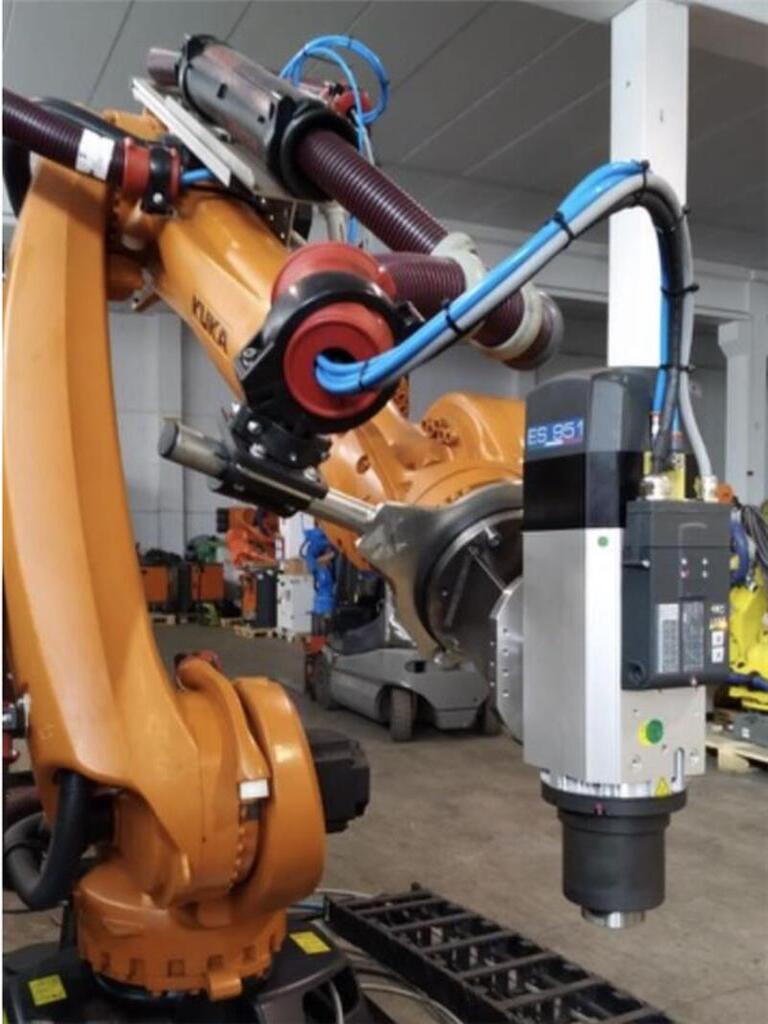
• Milling complex architectural models: Robots fitted with spindles and controlled via Grasshopper can mill organic surfaces, moulds or large-scale components with a freedom that fixed machines cannot match.
• Large-scale 3D printing: Robotic extruders deposit materials like bioplastics, clay or concrete to produce structures with free-form geometries.
• Automated assembly: Robots programmed parametrically can place bricks, pipes or panels following generative design patterns.
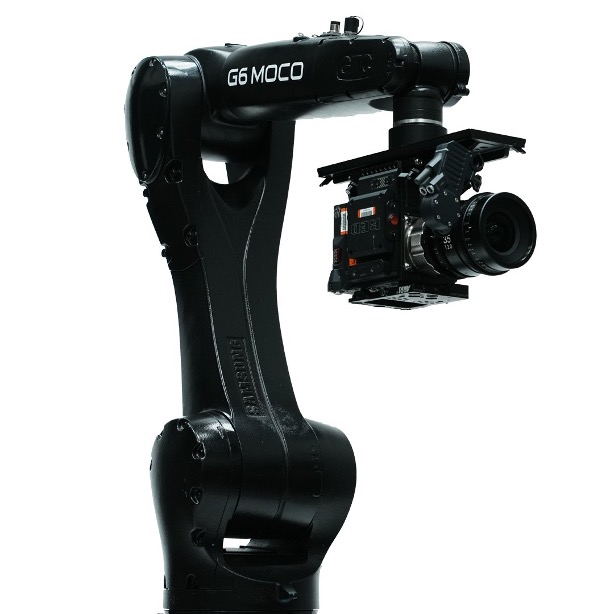
• Sculpture and interactive art: Artists use refurbished robots equipped with sensors or 3D vision to create interactive or kinetic works.
These projects show that robotics is no longer confined to factories—today, it’s also a tool for artistic exploration.
How Grasshopper Connects with Industrial Robots
The integration is based on a seamless digital workflow:
1. Parametric modelling: The designer defines geometries and rules in Grasshopper.
2. Path conversion: A plugin translates the model into movement coordinates (KRL or RAPID code).
3. Simulation: The visual environment previews the robot’s route and detects any collisions.
4. Execution: The file is sent to the robot controller (ABB IRC5, KUKA KRC4, etc.) to carry out the actual movements.
This flow removes the barrier between digital design and physical fabrication, paving the way for on-demand, customised manufacturing—a key concept in contemporary architecture.
As a result, university labs, architecture firms and independent designers can transform their digital models into tangible objects with industrial precision.
Parametric design and industrial robotics are redefining creative manufacturing. Today, an architect can design a pavilion in Rhino and produce it directly using a refurbished robot from Eurobots; a designer can sculpt a lamp or print a complex structure without relying on traditional machinery.
This convergence of algorithm, material and movement marks the beginning of a new era: parametric robotic design, where every object becomes a dialogue between data and mechanical precision.
 English
 Italiano
 Українська
 Русский
 Español