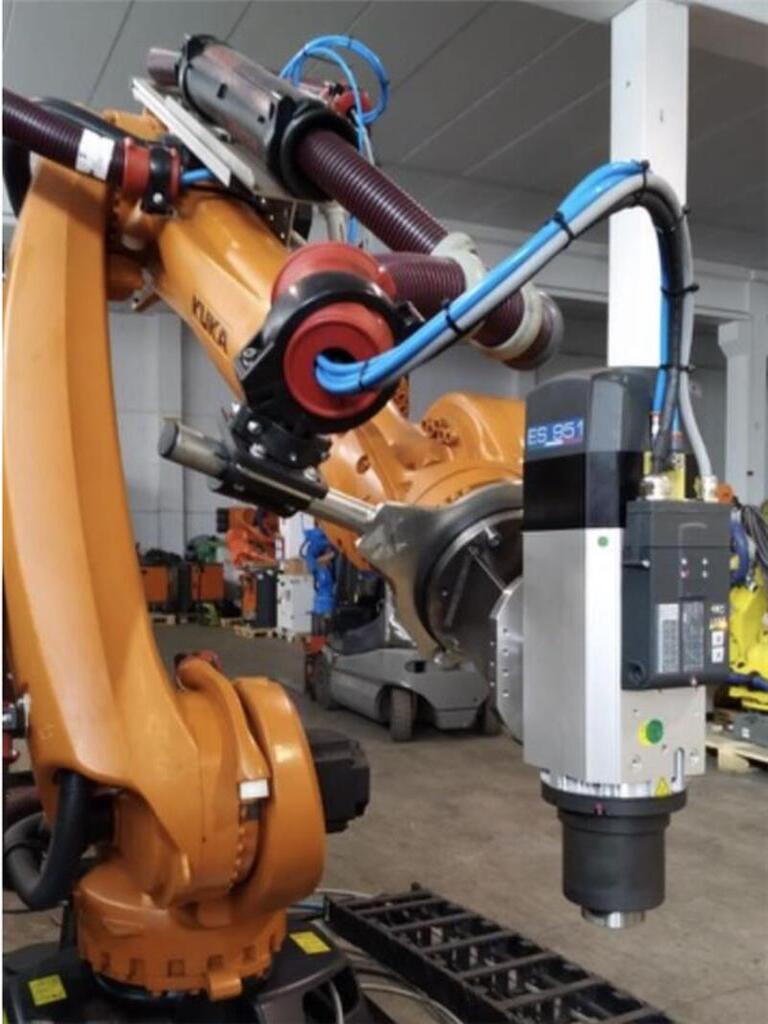
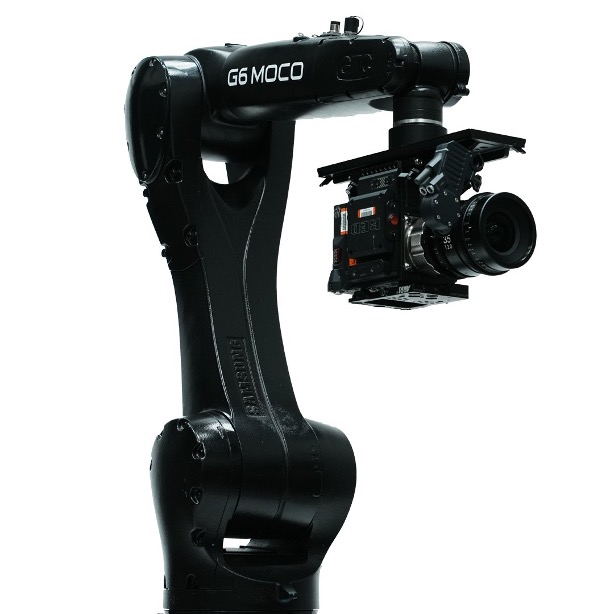
Industrial robots originated in manufacturing environments, performing tasks such as welding, assembling, milling, and moving components with millimetre accuracy. However, over the past decade, artists, designers, and creators have discovered something unexpected: precision can evolve into a new form of artistic expression. What is considered “repetition” in industry can, within the arts, be transformed into patterns, rhythms, choreographed movement, visual geometry, or even physical sculpture and markings.
Without listing specific cases, it is a fact that industrial robots have been used worldwide in set design, lighting, sculpture, photography, and visual performance. The robotic arm ceases to be merely a “machine” and becomes an “artistic tool”.
Why can a robot work in art? Primarily, it is because it controls movement with exactness. An industrial robot can follow programmed paths with typical repeatability within ±0.02–0.06 mm, depending on the manufacturer and model. In the context of art, this enables perfectly continuous lines, smooth and predictable movements, and synchronised choreographies. The robot is also able to explore space across six axes, making possible turns, arcs, spirals, and orientations that would be unachievable with a tripod, rail, or even a human arm. Unlike a human performer, the robot never tires and can repeat actions for hours without losing fluidity.
Where does improvisation fit in? While the robot itself does not improvise, it can execute variations devised by the artist, such as changes in speed, alterations to the path, different angles, or programmed sequences that resemble “controlled improvisation”. In essence, the creativity remains human, but the robot extends its possibilities.
Various types of artistic projects can benefit from this technology, including robot-assisted sculpture or carving, where the robot manipulates the tool while the artist determines the form; visual or stage performances with movements synchronised to music or light; long exposure photography or “light painting” with precisely controlled light trails; interactive installations where the robot’s movement responds to external signals; and automated painting or drawing, in which the robot executes complex, pre-programmed patterns or lines.
The artist’s role is not diminished; rather, it is transformed. Instead of replacing human expression, the robot enables the artist to become a choreographer of movement, defining the visual language, emotional intent, variations, and rhythm. The robot performs, but the meaning remains inherently human.
As for “sensitivity”, a robot does not possess feelings, yet it can repeat gestures with perfect accuracy, create patterns impossible to achieve by hand, explore intricate geometries, and generate immersive visual experiences. Sensitivity arises in the minds of both the creator and the audience.
The robot represents a platform for experimentation. It does not arrive with a predetermined function: it is an arm with six degrees of freedom, a tool for precise movement, a kinetic canvas. The creator decides whether it manifests as light, trace, sound, object, or movement.
Using refurbished industrial robots makes access more affordable than purchasing new ones, while maintaining original specifications, repeatability, and load capacity. This opens the door to studios, universities, creative collectives, and design laboratories.
The provider of the robotic solution can support the creator with essential aspects such as selecting the appropriate robot for reach and load, compatibility with tools or accessories, and basic integration for movement. They do not dictate the art; they simply facilitate its creation.
The industrial robot does not replace human creativity; it amplifies it. Precision becomes aesthetic, movement turns into language, repetition becomes pattern, and mechanics evoke visual emotion. When art merges with robotics, a new discipline is born: programmed expression. In this way, the robot ceases to be just a “machine” and becomes an instrument.
 English
 Italiano
 Українська
 Русский
 Español